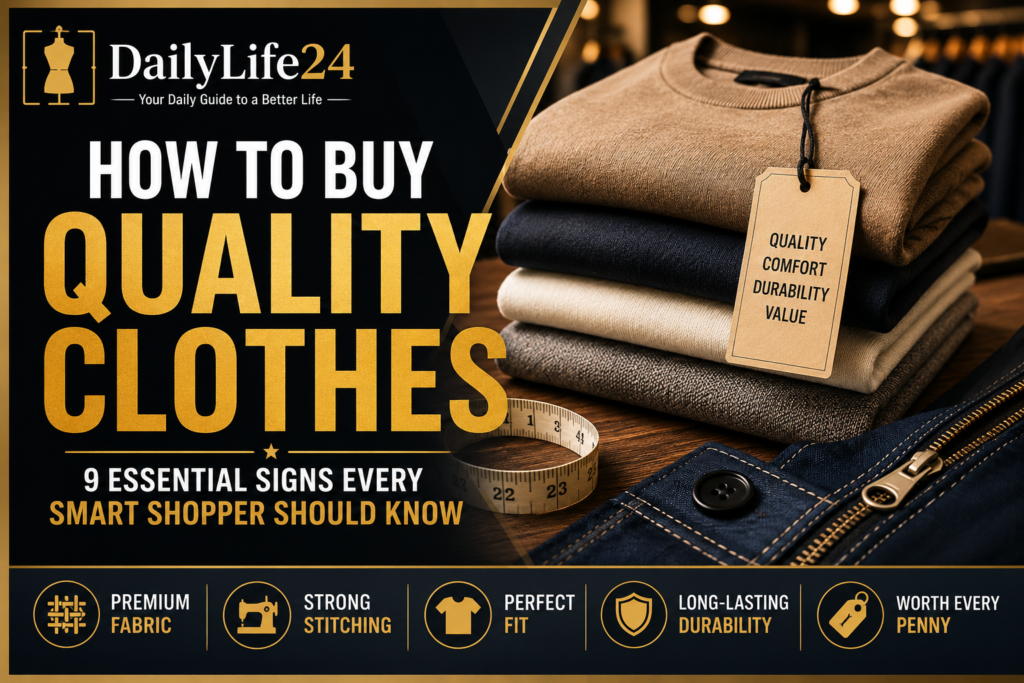
Buying new clothing isn’t always about finding the latest trend or the lowest price. Learning how to buy quality clothes helps you build a wardrobe that lasts longer, performs better, and provides greater value over time. Well-made clothing often feels more comfortable, maintains its appearance after repeated washing, and reduces the need for frequent replacements.
Many shoppers judge clothing by its brand name or price tag, but neither guarantees quality. A practical approach focuses on craftsmanship, fabric, construction, and long-term durability instead of marketing. Once you understand what to look for, you’ll make more confident purchasing decisions whether you’re shopping online or visiting a physical store.
This guide explains the practical signs of quality clothing so you can invest in garments that support your wardrobe for years instead of seasons.
Why Clothing Quality Matters More Than Price
One of the biggest misconceptions in fashion is that expensive clothing is automatically better.
Understanding how to buy quality clothes means looking beyond price and focusing on value. A moderately priced garment with strong construction can outperform a much more expensive item made with lower-quality materials.
Quality clothing usually offers benefits such as:
- Better durability.
- Improved comfort.
- Stronger stitching.
- More consistent fit.
- Better fabric performance.
- Longer lifespan.
Instead of asking, “How much does it cost?” ask, “How long will I realistically wear it?”
That simple question often leads to smarter buying decisions.
Start With the Fabric Before Anything Else
The fabric is the foundation of every garment.
If you’re learning how to buy quality clothes, examine the material before looking at colors or design. Fabric influences comfort, durability, breathability, wrinkle resistance, and overall performance.
When evaluating clothing, pay attention to:
- How the fabric feels.
- Whether it quickly returns to its original shape.
- The thickness and consistency of the material.
- Whether the fabric appears tightly woven.
- How suitable it is for your climate and daily routine.
High-quality fabric doesn’t always have to feel heavy. The goal is choosing materials that perform well for their intended purpose.
Examine the Stitching Carefully
Strong stitching is one of the easiest ways to identify well-made clothing.
Quality garments usually have stitching that is:
- Straight and even.
- Secure at seams.
- Free from loose threads.
- Consistent throughout the garment.
Check areas that experience the most movement, including:
- Shoulders.
- Side seams.
- Underarms.
- Pocket openings.
- Hems.
Weak stitching often becomes visible long before the fabric wears out.
Check How the Garment Holds Its Shape
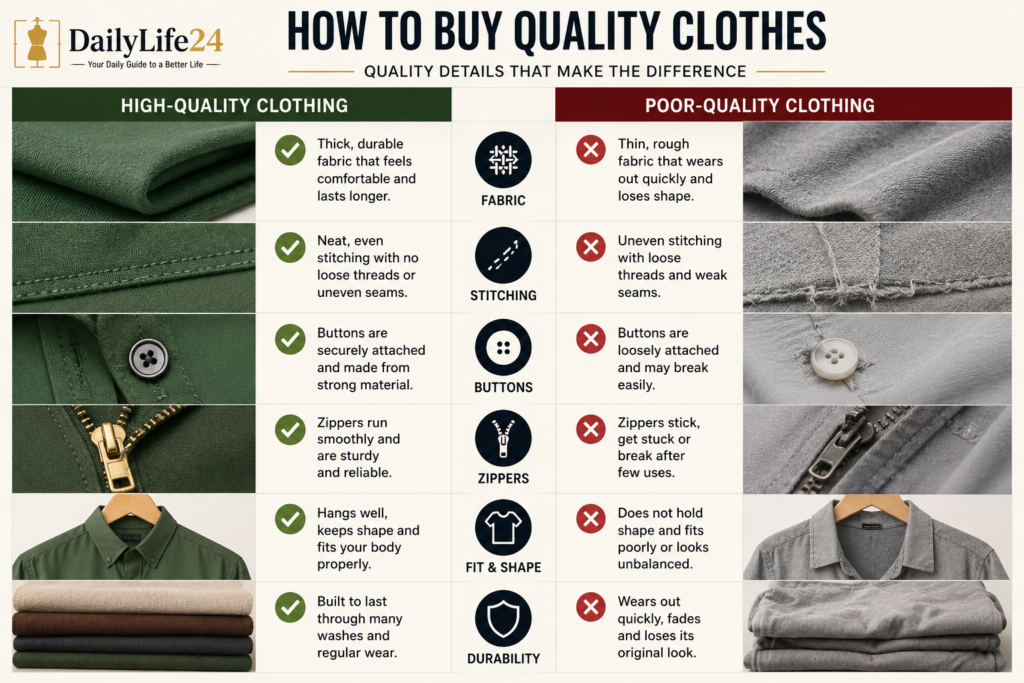
A useful way to understand how to buy quality clothes is by observing how a garment maintains its structure.
Well-constructed clothing generally:
- Hangs evenly.
- Keeps its shape without twisting.
- Has balanced proportions.
- Lays flat at the seams.
- Feels stable when worn.
Poor construction often becomes noticeable after only a few washes, causing garments to stretch unevenly or lose their original fit.
Don’t Ignore Small Construction Details
Small details often reveal the overall quality of a garment.
Take a closer look at:
Buttons
They should feel secure, evenly attached, and properly aligned.
Zippers
They should move smoothly without catching or separating.
Pockets
Pockets should sit evenly and feel firmly attached.
Linings
If included, the lining should lie flat without pulling or bunching.
These finishing details may seem minor, but together they provide valuable clues about how carefully the garment was made.
Quality Clothing Supports a Better Wardrobe
Buying fewer, better-made garments often creates a stronger wardrobe than purchasing large amounts of lower-quality clothing.
As you continue learning how to buy quality clothes, you’ll begin recognizing the difference between garments designed for long-term use and those created primarily to attract attention on a store shelf.
Rather than replacing clothing every few months, thoughtful purchases allow your wardrobe to become more reliable, versatile, and enjoyable to wear over time.
Read Clothing Labels Like a Smart Shopper
One of the easiest ways to understand how to buy quality clothes is by reading clothing labels carefully instead of removing them without looking. Labels provide useful information about fabric composition, care instructions, and manufacturing details that help you evaluate whether a garment suits your needs.
Pay attention to:
- Fabric composition
- Care instructions
- Country of manufacture
- Washing recommendations
- Ironing instructions
- Drying methods
A garment that’s difficult to maintain may not be the best choice if it doesn’t match your lifestyle.
Check the Fit Before Thinking About Style
Even well-made clothing loses its value if it doesn’t fit properly.
Learning how to buy quality clothes includes understanding that fit should always come before fashion trends.
Look for garments that:
- Sit naturally across your shoulders.
- Allow comfortable movement.
- Hang evenly without twisting.
- Follow your body shape without feeling restrictive.
- Leave enough room for everyday movement.
A properly fitted garment often looks more expensive than an expensive garment with poor fit.
Test the Construction Before Buying
When shopping in a physical store, take a few moments to inspect the garment.
Simple checks can reveal a surprising amount about overall quality.
Examine the Seams
Turn the garment inside out if possible.
Well-finished seams should appear neat, straight, and securely stitched.
Check Pattern Alignment
If the clothing uses checks, stripes, or printed designs, patterns should align naturally across seams whenever possible.
Test Buttons and Fasteners
Buttons should feel firmly attached.
Zippers should move smoothly without sticking.
Look for Reinforced Stress Points
Areas such as pockets, cuffs, and shoulder seams should show signs of additional reinforcement because they experience frequent movement.
These small inspections help you understand how to buy quality clothes with greater confidence.
Compare Clothing by Value Instead of Brand
Brand names can influence buying decisions, but they don’t always reflect garment quality.
Instead of asking:
“Which brand is better?”
Ask questions like:
- Will this garment last?
- Does it suit my lifestyle?
- Can I wear it regularly?
- Does it coordinate with my wardrobe?
- Is it comfortable enough for everyday use?
Understanding how to buy quality clothes means focusing on long-term value rather than logos or marketing.
Build a Wardrobe One Quality Piece at a Time
Many people believe they need to replace their entire wardrobe immediately.
That’s rarely necessary.
A better strategy is to improve your wardrobe gradually.
For example:
- Replace heavily worn clothing first.
- Prioritize everyday essentials.
- Invest in versatile garments.
- Buy fewer pieces with better construction.
- Avoid unnecessary duplicate purchases.
Over time, these decisions create a wardrobe that remains functional without becoming overcrowded.
Common Mistakes When Buying Clothes
Avoiding common mistakes is an important part of learning how to buy quality clothes.
Buying Only Because It’s on Sale
A discount doesn’t automatically make clothing a good purchase.
If the garment doesn’t suit your wardrobe, it’s unlikely to provide long-term value.
Ignoring Care Requirements
Some clothing requires maintenance that doesn’t fit your daily routine.
Always consider whether you’re willing to care for the garment properly.
Choosing Quantity Over Durability
Buying several inexpensive garments often costs more over time than purchasing one durable piece you’ll wear frequently.
Shopping Without a Plan
Entering a store without knowing what you need often leads to impulse purchases.
Keeping a simple shopping list helps every purchase support your wardrobe goals.
A Quality Wardrobe Is Built Through Better Decisions
The process of learning how to buy quality clothes doesn’t end after one shopping trip.
Every purchase gives you another opportunity to improve your wardrobe.
As your experience grows, you’ll recognize well-made clothing more quickly, avoid unnecessary spending, and make purchasing decisions with greater confidence.
In the final section, we’ll answer the most common questions about buying quality clothing, summarize the key principles, and connect this guide with the rest of the DailyLife24 fashion series without overlapping the topics covered in previous articles.
A Simple Quality Checklist Before Every Purchase
One of the easiest ways to remember how to buy quality clothes is to follow the same checklist every time you shop. Instead of relying on brand names or attractive displays, evaluate each garment using consistent standards.
Ask yourself these questions before buying:
| Quality Check | Yes | No |
| Does the fabric feel durable and comfortable? | ☐ | ☐ |
| Are the seams neat and evenly stitched? | ☐ | ☐ |
| Do the buttons and zippers feel secure? | ☐ | ☐ |
| Does the garment fit properly? | ☐ | ☐ |
| Can I wear it with several outfits I already own? | ☐ | ☐ |
| Will I still enjoy wearing it next year? | ☐ | ☐ |
If most of your answers are “Yes,” the garment is more likely to become a valuable part of your wardrobe.
Build Better Shopping Habits Over Time
Learning how to buy quality clothes is a skill that improves with experience. Every thoughtful purchase helps you understand which fabrics, construction methods, and clothing styles perform best for your daily routine.
Develop simple habits like:
- Comparing several garments before buying.
- Inspecting construction instead of focusing only on appearance.
- Choosing versatility over short-lived trends.
- Buying only when you identify a genuine wardrobe need.
- Keeping a record of brands or clothing types that have performed well over time.
These habits make future shopping easier while reducing unnecessary purchases.
Create Your Own Clothing Quality Standard
One of the most effective ways to improve your shopping decisions is to develop a personal quality checklist. As you continue learning how to buy quality clothes, you’ll begin noticing that the garments you wear most often usually share the same characteristics. They fit comfortably, feel durable, maintain their appearance after repeated washing, and work well with several outfits already in your wardrobe. Recognizing these patterns makes future purchases easier because you know exactly what standards to look for before spending your money.
Keeping a simple record of successful purchases can also improve the way you shop. Write down which fabrics remain comfortable, which clothing brands consistently meet your expectations, and which garment styles suit your lifestyle best. Over time, this information becomes your own buying guide rather than relying on advertisements or changing fashion trends. Developing this habit strengthens your ability to how to buy quality clothes with greater confidence while building a wardrobe that delivers long-term value, versatility, and everyday comfort.
Frequently Asked Questions
How can I tell if clothing is high quality?
One of the easiest ways to learn how to buy quality clothes is by checking the fabric, stitching, fit, construction, and finishing details instead of judging clothing by its price alone.
Does expensive clothing always mean better quality?
No. Price doesn’t automatically reflect quality. Well-made clothing can often be found at different price points when you know what to look for.
Which fabric should I choose?
The best fabric depends on how and where you’ll wear the garment. Focus on materials that feel comfortable, suit your climate, and match your daily lifestyle.
How important is stitching?
Strong, even stitching is one of the clearest signs of quality construction because seams experience constant movement during everyday wear.
Should I always buy branded clothing?
Not necessarily. A lesser-known brand can sometimes offer better construction and value than a well-known label.
How can I make clothes last longer?
Follow the care instructions, wash garments appropriately, store them correctly, and repair minor damage before it becomes more serious.
Is tailoring worth considering?
Yes. Even a well-made garment may benefit from small alterations that improve fit and overall appearance.
What’s the biggest mistake shoppers make?
Many people buy clothing based only on appearance. Learning how to buy quality clothes means evaluating durability, fit, versatility, and long-term value before making a purchase.
Invest in Clothing That Delivers Long-Term Value
When you understand how to buy quality clothes, shopping becomes less about collecting more garments and more about choosing pieces that continue to perform well over time. Clothing that maintains its shape, color, and comfort after repeated wear often provides far greater value than cheaper alternatives that need replacing after only a few months. Every thoughtful purchase strengthens your wardrobe and reduces unnecessary spending in the future.
Learning how to buy quality clothes also helps you develop better shopping habits. Instead of making decisions based on discounts or trends, you’ll begin evaluating every garment by its construction, durability, versatility, and everyday usefulness. Over time, these habits create a wardrobe filled with reliable clothing that looks better, lasts longer, and supports your personal style with confidence.
Build a Habit of Evaluating Every Garment
The more often you practice how to buy quality clothes, the easier it becomes to recognize well-made garments at a glance. Instead of relying on advertising or price tags, you’ll begin noticing details such as fabric consistency, stitching quality, balanced construction, and overall finish. These observations help you make confident decisions regardless of where you shop.
A practical way to improve how to buy quality clothes is to compare several garments before making your final decision. Even when two items look similar, small differences in construction, fit, and finishing can have a significant impact on comfort and durability. Taking a few extra minutes to compare options often leads to a purchase that provides better value over the long term.
As your experience grows, how to buy quality clothes becomes less about memorizing rules and more about developing good judgment. Every thoughtful purchase strengthens your understanding of what works for your wardrobe, making future shopping faster, easier, and more rewarding.
Make Every Purchase a Long-Term Investment
Developing the skill of how to buy quality clothes takes practice, but every shopping experience helps you make better decisions. As you become familiar with strong fabrics, reliable stitching, balanced construction, and proper fit, you’ll spend less time replacing worn-out garments and more time enjoying clothing that continues to perform well year after year.
Another advantage of learning how to buy quality clothes is that it helps you create a wardrobe based on purpose instead of impulse. Every new item should complement the clothes you already own, allowing you to build more outfit combinations without filling your closet with unnecessary purchases. This approach saves money while making everyday dressing easier.
Over time, how to buy quality clothes becomes part of your natural shopping routine rather than a checklist you have to remember. You’ll quickly recognize garments that offer genuine value, avoid products with poor construction, and invest in clothing that supports your lifestyle, personal style, and long-term wardrobe goals.
Final Thoughts
Understanding how to buy quality clothes allows you to build a wardrobe that performs better over time while reducing unnecessary spending. Instead of replacing worn clothing every season, you’ll invest in garments that remain comfortable, versatile, and dependable for everyday use.
The best shopping decisions aren’t always the fastest ones. Taking a few extra minutes to inspect fabric, construction, fit, and finishing details can help you choose clothing that continues to look and feel great long after the purchase.
More From DailyLife24
Continue building your fashion knowledge with every guide in this complete learning series:
Build Your Personal Style – Learn how to discover a style that reflects your personality, lifestyle, and everyday clothing preferences.
Capsule Wardrobe for Beginners – Build a versatile wardrobe with fewer pieces that work together in multiple outfit combinations.
Online Clothing Shopping Tips – Make smarter online purchases by comparing products, checking sizing, and avoiding common buying mistakes.
How to Look Taller With Clothes – Discover practical styling techniques that create balanced proportions and a taller visual appearance.
Everyday Style Guide for Beginners: Build a Smarter Wardrobe in 5 Simple Steps – Use this complete DailyLife24 roadmap to connect every fashion lesson into one practical system for long-term style improvement.
Editorial Note
Editorial Note: This article has been researched and written exclusively for DailyLife24 using original educational content and practical clothing evaluation principles. The guidance is designed to help readers make informed purchasing decisions based on quality, durability, and long-term value rather than trends or marketing. Individual preferences, budgets, and clothing needs may vary, so readers should adapt these recommendations to suit their own lifestyle.