Finding clothes you like is easy. Building a wardrobe that consistently reflects who you are is much harder. If you’ve ever opened your closet and felt like nothing truly represents you, you’re not alone. Learning how to build your personal style isn’t about following every new trend or buying expensive brands. It’s about making intentional choices that fit your lifestyle, personality, comfort level, and daily routine.
Your personal style develops over time through observation, experimentation, and confidence. Instead of copying influencers or celebrities, focus on creating a wardrobe that works for your real life. Whether you’re a student, a professional, or someone looking for a fresh start, the right style should make getting dressed easier—not more complicated.
This guide introduces a practical framework for building your own style from the ground up. You’ll learn how to understand your preferences, identify what suits your lifestyle, and make smarter clothing decisions that remain useful long after temporary trends fade.
Why Personal Style Matters More Than Following Trends
Many people believe looking stylish means keeping up with the latest fashion trends. In reality, trends change quickly, while personal style evolves more slowly and becomes more consistent over time.
A well-developed personal style offers several long-term benefits:
- It reduces the stress of choosing outfits each day.
- It helps you make more confident shopping decisions.
- It creates consistency across your wardrobe.
- It minimizes impulse purchases that rarely get worn.
- It allows your clothing to reflect your personality rather than someone else’s.
Instead of asking, “What’s popular right now?” ask yourself, “What do I enjoy wearing repeatedly?” That small change in mindset can have a significant impact on how you build your wardrobe.
Personal style also saves time and money. When you understand what works for you, you’re less likely to buy items that sit unused in your closet.
Understanding the Four Foundations of Personal Style
Before buying new clothes, it’s important to understand what influences your style choices. Many people focus only on appearance, but a lasting wardrobe is built on four practical foundations.
1. Lifestyle
Your daily routine should shape your wardrobe.
Consider questions like:
- Do you work in an office or from home?
- How often do you attend formal events?
- Do you spend most of your time indoors or outdoors?
- Is comfort your highest priority?
- Do you travel frequently?
A wardrobe that matches your lifestyle is easier to wear consistently than one built around occasional situations.
2. Comfort
Confidence often begins with comfort.
Some people prefer relaxed clothing, while others enjoy more structured outfits. Neither approach is right or wrong. The key is recognizing which fabrics, fits, and silhouettes help you feel comfortable throughout the day.
When you’re physically comfortable, you naturally appear more confident.
3. Personality
Clothing communicates before you speak.
Think about three words you’d like people to associate with your appearance.
Examples include:
- Professional
- Creative
- Relaxed
- Elegant
- Modern
- Practical
- Minimal
- Energetic
These words can guide future clothing choices and help create consistency across your wardrobe.
4. Practical Needs
Style should support your daily life rather than complicate it.
Your climate, transportation, work environment, hobbies, and budget all influence which clothing makes sense for you.
Ignoring practical needs often leads to wardrobes filled with attractive pieces that rarely get worn.
How to Build Your Personal Style Without Copying Other People
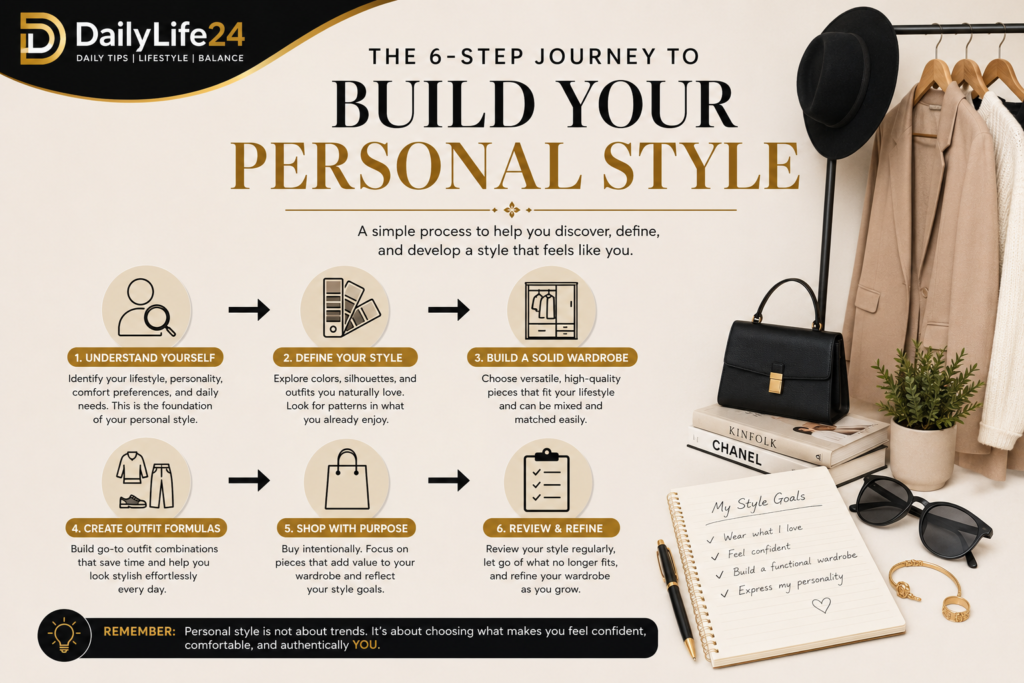
It’s natural to admire someone else’s fashion sense, but copying every outfit rarely creates a wardrobe that feels authentic.
Instead, learn from inspiration rather than imitation.
Here’s a simple approach:
Observe
Notice what attracts your attention.
Rather than saving every outfit you like, look for patterns.
Ask yourself:
- Do you prefer neutral colors?
- Are you drawn to simple designs?
- Do you like structured jackets?
- Do you prefer loose or tailored clothing?
- Are your favorite outfits casual or polished?
Patterns reveal your preferences better than individual outfits.
Evaluate
Before purchasing something, ask:
- Would I wear this regularly?
- Does it match clothes I already own?
- Does it fit my daily routine?
- Can I create multiple outfits with it?
If the answer to most of these questions is “no,” it probably doesn’t belong in your wardrobe.
Adapt
Instead of recreating someone else’s outfit exactly, adapt the ideas to suit your own lifestyle.
For example, if you admire a layered street-style look but live in a warm climate, you can borrow the color palette or proportions without copying every item.
This approach helps your wardrobe develop its own identity.
The Personal Style Discovery Exercise
One of the easiest ways to understand your clothing preferences is by reviewing what you already wear.
Take out ten outfits you enjoy wearing the most.
Now look for common characteristics.
| Question | Your Observation |
| Which colors appear most often? | |
| Which fabrics feel most comfortable? | |
| Which shoes do you wear repeatedly? | |
| Which outfits make you feel most confident? | |
| Which clothing items rarely leave your closet? |
This simple exercise reveals the habits you already have rather than the style you think you should have.
Many people discover that their favorite outfits share similar colors, fits, or levels of formality. Those recurring patterns become the foundation of a personal style that’s both practical and authentic.
Start Small Instead of Changing Everything
One of the biggest mistakes people make is trying to completely reinvent their wardrobe overnight.
Building your personal style works best through gradual improvements.
Instead of replacing everything at once:
- Upgrade one clothing category at a time.
- Wear new combinations using pieces you already own.
- Experiment with different colors in small ways.
- Pay attention to which outfits receive the most wear.
- Learn from each purchase before making the next one.
Small, consistent changes often produce better long-term results than dramatic wardrobe makeovers.
By focusing on thoughtful decisions rather than quick transformations, you’ll begin creating a wardrobe that genuinely reflects your personality and supports your everyday life.
How to Build Your Personal Style by Understanding Your Color Preferences
One of the most overlooked steps in learning how to build your personal style is understanding the colors you naturally enjoy wearing. While many fashion articles focus on seasonal color trends, your everyday wardrobe should be based on colors that make you feel comfortable and work well together.
Instead of chasing new color trends every few months, identify a color palette that fits your lifestyle. This makes shopping easier and helps you create outfits with fewer clothing pieces.
A practical way to begin is by dividing colors into three groups.
Core Colors
These are the colors you’ll wear most often because they’re easy to combine.
Examples include:
- Black
- White
- Navy
- Gray
- Beige
- Olive
Your core colors should make up most of your wardrobe because they create flexibility.
Secondary Colors
These colors add variety without dominating your wardrobe.
You might choose:
- Light blue
- Burgundy
- Forest green
- Brown
- Cream
- Dusty pink
Secondary colors help your outfits feel fresh while still matching your core pieces.
Accent Colors
Accent colors appear occasionally through accessories or statement clothing.
Examples include:
- Mustard
- Rust
- Emerald
- Deep red
- Teal
Using accent colors sparingly creates interest without overwhelming your wardrobe.
The goal isn’t to limit your choices. It’s to create consistency so getting dressed becomes simpler every day.
How to Build Your Personal Style Around Clothing Fit Instead of Size
Many people choose clothing based only on the size label. In reality, fit has a much greater impact on how an outfit looks than the number printed inside the garment.
Different brands use different sizing systems, so focusing on fit produces more reliable results.
When evaluating clothing, pay attention to:
Shoulder Fit
Jackets and shirts should sit naturally on your shoulders without pulling or drooping.
Sleeve Length
Sleeves should allow comfortable movement without appearing too short or excessively long.
Waist Shape
Your clothing should provide enough room for movement while maintaining a clean silhouette.
Trouser Length
Pants should complement your footwear and avoid excessive bunching around the ankles.
Overall Balance
Rather than asking whether an item is trendy, ask whether it creates balanced proportions for your body.
Choosing clothing that fits well often makes affordable outfits look more polished than expensive clothing with poor fit.
Build Outfit Formulas You Can Repeat
People with consistent personal style rarely create every outfit from scratch each morning.
Instead, they develop simple outfit formulas that work repeatedly.
Examples include:
- T-shirt + jeans + sneakers
- Oxford shirt + chinos + loafers
- Knit sweater + trousers + boots
- Blazer + plain T-shirt + dark jeans
- Polo shirt + tailored shorts + casual shoes
These combinations save time while keeping your appearance consistent.
You can create several outfit formulas for different situations.
Everyday Formula
Comfortable clothing suitable for daily errands and casual activities.
Work Formula
Professional clothing appropriate for meetings or office environments.
Weekend Formula
Relaxed outfits designed for leisure while still looking put together.
Special Occasion Formula
Dressier combinations reserved for celebrations, dinners, or formal events.
Repeating successful outfit formulas doesn’t reduce creativity. It simply removes unnecessary decision-making.
Shopping Smarter While Building Your Personal Style
One of the biggest obstacles to developing personal style is buying clothing without a plan.
Before purchasing anything, use this simple checklist.
| Question | Yes | No |
| Does it match at least three items I already own? | ☐ | ☐ |
| Will I wear it regularly? | ☐ | ☐ |
| Does it suit my lifestyle? | ☐ | ☐ |
| Is it comfortable? | ☐ | ☐ |
| Would I still buy it if it weren’t on sale? | ☐ | ☐ |
If several answers are “No,” consider waiting before making the purchase.
Building your personal style is about collecting useful clothing rather than accumulating more clothing.
Quality decisions made consistently often produce a stronger wardrobe than frequent impulse shopping.
Habits That Help You Build Your Personal Style Faster
Developing personal style isn’t a one-time project. It’s an ongoing process shaped by everyday habits.
Here are several habits that make the process easier.
Photograph Your Favorite Outfits
Keeping photos of outfits you enjoy helps identify recurring patterns.
You’ll begin noticing which colors, silhouettes, and clothing combinations appear most often.
Review Your Wardrobe Regularly
Every few months, look through your closet.
Separate clothing into categories:
- Worn frequently
- Occasionally worn
- Rarely worn
This simple review helps you understand what actually supports your lifestyle.
Buy With Purpose
Instead of asking, “Do I like this?”
Ask:
- Does this improve my wardrobe?
- Does it solve a clothing gap?
- Will it increase outfit options?
Purposeful shopping leads to better long-term results.
Accept That Style Evolves
Your personal style today may look different from your style five years from now.
Career changes, hobbies, travel, and lifestyle shifts naturally influence clothing choices.
Rather than chasing perfection, allow your wardrobe to evolve gradually while maintaining consistency.
Learning how to build your personal style is less about reaching a final destination and more about developing habits that help your wardrobe grow alongside your life.
Common Challenges When Building Your Personal Style
Even with a clear plan, building a personal style isn’t always straightforward. Most people encounter similar obstacles, especially during the early stages. Recognizing these challenges can help you avoid frustration and continue improving your wardrobe with confidence.
Buying Clothes Without a Purpose
One of the most common habits is purchasing clothing simply because it’s on sale or currently popular. While a discounted item may seem like a good deal, it doesn’t add value if it doesn’t fit your wardrobe.
Before every purchase, ask yourself:
- Does this support my personal style?
- Can I wear it in different situations?
- Will I still enjoy wearing it six months from now?
Purpose-driven shopping helps your wardrobe grow in a consistent direction.
Comparing Yourself to Others
Social media makes it easy to compare your appearance with influencers, celebrities, or fashion creators. However, their clothing choices often reflect different lifestyles, climates, occupations, and budgets.
Your goal shouldn’t be to look like someone else. Instead, focus on building a style that feels authentic and practical for your own life.
Expecting Instant Results
Personal style develops gradually. As your lifestyle changes, your clothing preferences will naturally evolve as well.
Rather than searching for a “perfect” wardrobe, think of it as a collection that improves with every thoughtful decision you make.
A Simple Monthly Style Review
Maintaining your personal style doesn’t require buying new clothes every month. Instead, schedule a quick wardrobe review every few weeks.
Use this checklist:
| Question | Yes | No |
| Did I wear this item recently? | ☐ | ☐ |
| Does it still fit comfortably? | ☐ | ☐ |
| Does it match my current style? | ☐ | ☐ |
| Can I create multiple outfits with it? | ☐ | ☐ |
| Would I buy it again today? | ☐ | ☐ |
If several answers are “No,” it may be time to donate, repair, or replace that item.
Small reviews like this help keep your wardrobe organized and prevent unnecessary clutter.
Why Consistency Helps You Build Your Personal Style
One of the biggest advantages of learning to build your personal style is consistency. When your wardrobe reflects your preferences instead of temporary trends, choosing outfits becomes faster and more enjoyable. Over time, you’ll notice that you spend less money on impulse purchases and more on clothing that genuinely fits your lifestyle.
Every small improvement helps you build your personal style with greater confidence. Instead of replacing everything at once, focus on making thoughtful decisions that strengthen your wardrobe one piece at a time.
Build Your Personal Style With Small Daily Habits
You don’t need a complete wardrobe makeover to build your personal style successfully. Small habits often have the biggest impact.
Try these simple practices:
- Photograph outfits you enjoy wearing.
- Keep a list of clothing items you actually need.
- Review your wardrobe every few months.
- Avoid buying items that don’t match your existing clothes.
- Wear your favorite outfit combinations more often.
These habits make it easier to build your personal style naturally without feeling overwhelmed.
Your Personal Style Continues to Evolve
Remember that learning to build your personal style is an ongoing process rather than a final destination. Your lifestyle, career, interests, and daily routine will change over time, and your wardrobe should grow with you.
The most successful wardrobes aren’t the largest ones—they’re the ones built with purpose. If you continue to build your personal style through careful planning, smart shopping, and regular wardrobe reviews, you’ll create a collection of clothing that remains practical, versatile, and uniquely yours for years to come.
How to Build Your Personal Style for Long-Term Success
Learning to build your personal style is a gradual process that improves with every thoughtful decision you make. Rather than chasing every new trend, focus on clothing that fits your daily routine and reflects your personality.
As you continue to build your personal style, you’ll become more confident about choosing colors, creating outfit combinations, and making smarter shopping decisions. Over time, your wardrobe will feel more organized because every purchase supports the same overall direction.
Many people believe they need a completely new wardrobe to build your personal style, but that’s rarely true. Small improvements made consistently usually produce better results than replacing everything at once.
The best way to build your personal style is to review your wardrobe regularly, learn from your favorite outfits, and make each new purchase with a clear purpose. When your clothing choices reflect your lifestyle instead of temporary trends, it becomes much easier to build your personal style with confidence.
Frequently Asked Questions
How long does it take to build your personal style?
There isn’t a fixed timeline. Some people discover their preferences within a few months, while others continue refining their style over several years. The key is making consistent, intentional choices rather than rushing the process.
Do I need expensive clothing to build my personal style?
No. Personal style is based on how well your clothing fits your lifestyle, personality, and preferences—not on price. Well-chosen affordable pieces can create a polished wardrobe.
Can my personal style change over time?
Yes. Career changes, new hobbies, different climates, and evolving preferences can all influence your clothing choices. Your wardrobe should adapt as your lifestyle changes.
How many clothes do I need to have good personal style?
Quality matters more than quantity. A smaller wardrobe filled with versatile pieces you wear regularly is often more useful than a large wardrobe with rarely used items.
Should I follow fashion trends?
You can use trends for inspiration, but they shouldn’t define your wardrobe. Choose trends that naturally fit your personal style rather than changing your style to match every new trend.
What’s the biggest mistake people make when building their personal style?
Buying clothing without a clear purpose. Every purchase should complement your existing wardrobe and support your long-term style goals.
Can I have more than one personal style?
Absolutely. Many people have different outfit combinations for work, weekends, travel, and special occasions while maintaining a consistent overall identity.
How often should I update my wardrobe?
Instead of replacing everything each season, review your wardrobe regularly and make gradual improvements based on what you actually wear.
Final Thoughts
Learning how to build your personal style is a long-term investment in yourself. It’s not about collecting the most clothing or following every trend. It’s about understanding your lifestyle, recognizing your preferences, and making thoughtful decisions that help your wardrobe become more functional over time.
As your confidence grows, your clothing choices will become more intentional, and getting dressed each day will feel simpler and more enjoyable. Remember that personal style isn’t something you find overnight—it’s something you develop through experience.
More From DailyLife24
Continue building your fashion knowledge with every guide in this complete learning series:
Capsule Wardrobe for Beginners – Build a versatile wardrobe with fewer pieces that work together in multiple outfit combinations.
Online Clothing Shopping Tips – Make smarter online purchases by comparing products, checking sizing, and avoiding common buying mistakes.
How to Look Taller With Clothes – Discover practical styling techniques that create balanced proportions and a taller visual appearance.
How to Buy Quality Clothes – Learn how to identify durable fabrics, strong construction, and long-lasting garments before making a purchase.
Everyday Style Guide for Beginners: Build a Smarter Wardrobe in 5 Simple Steps – Use this complete DailyLife24 roadmap to connect every fashion lesson into one practical system for long-term style improvement.
Editorial Note
Editorial Note: This article has been written exclusively for DailyLife24 using original analysis, practical guidance, and general fashion principles. It has been created to provide helpful educational information for readers while avoiding unnecessary trend-chasing or duplicated content. Fashion preferences are personal, and readers are encouraged to adapt the ideas in this guide to suit their own lifestyle, comfort, and individual style goals.