Most fashion advice starts with clothes.
This guide starts with decisions.
An attractive wardrobe isn’t created by buying expensive outfits or copying social media trends. Instead, it develops through a series of practical choices that become everyday habits. That’s exactly what this everyday style guide for beginners is designed to teach. Rather than focusing on trends, you’ll learn how to think about clothing, organize your wardrobe, shop more intentionally, and create outfits that genuinely support your lifestyle.
Unlike traditional fashion guides, this article doesn’t ask you to replace your wardrobe or follow seasonal collections. Instead, it introduces a practical system that helps every clothing decision become easier over time. Each section builds a foundation that connects naturally with the more detailed DailyLife24 guides without repeating them.
If you’re building your first wardrobe or simply want a smarter approach to everyday dressing, this everyday style guide for beginners provides the roadmap that ties everything together.
Fashion Is a Skill, Not a Talent
One of the biggest myths in fashion is that some people are simply born with great style.
In reality, style works much like cooking, driving, or learning a language. Nobody starts as an expert. Confidence develops through observation, practice, and experience.
That’s why this everyday style guide for beginners focuses on developing practical decision-making skills instead of teaching fashion rules to memorize.
People who consistently dress well usually follow simple habits:
- They understand what suits their lifestyle.
- They avoid unnecessary purchases.
- They organize their wardrobe efficiently.
- They buy with purpose.
- They improve gradually instead of changing everything at once.
These habits can be learned by anyone.
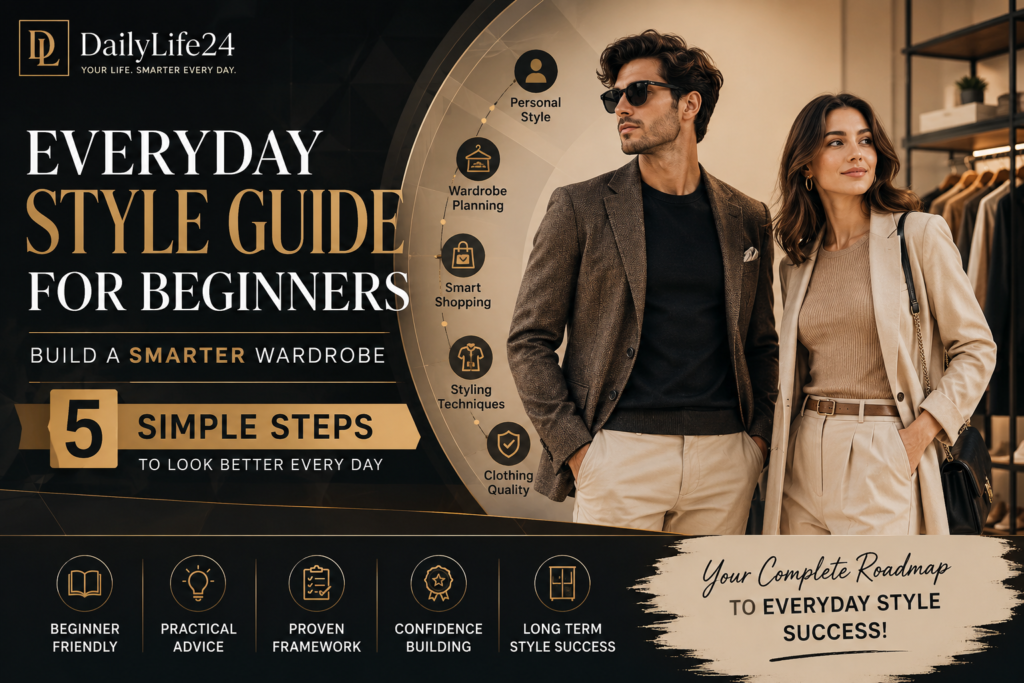
The DailyLife24 Five-Step Style System
Most fashion websites teach isolated tips.
DailyLife24 approaches fashion differently.
Instead of treating every topic as separate, we’ve created a connected learning system where each skill supports the next one.
Our five-step system looks like this:
| Step | Focus | Goal |
| Step 1 | Personal Style | Understand your preferences before buying clothing. |
| Step 2 | Wardrobe Planning | Build versatile clothing that works together. |
| Step 3 | Smart Shopping | Make better purchasing decisions. |
| Step 4 | Styling Techniques | Learn how clothing changes visual proportions. |
| Step 5 | Clothing Quality | Buy garments that provide long-term value. |
Rather than trying to master everything at once, each step strengthens the next.
This connected approach is what makes this everyday style guide for beginners different from articles that simply list random fashion advice.
Start With Your Lifestyle Before Your Wardrobe
Many people buy clothing based on appearance alone.
A more effective approach begins somewhere else.
Start by understanding how you actually spend your week.
Ask yourself:
- How often do I wear casual clothing?
- Do I work in a professional environment?
- Do I attend formal events regularly?
- What weather do I experience most often?
- Which clothes do I wear repeatedly?
The answers reveal the type of wardrobe you truly need.
A wardrobe should support your routine rather than create additional decisions every morning.
When clothing reflects your lifestyle, getting dressed becomes easier, faster, and more enjoyable.
Think in Outfit Systems Instead of Individual Clothes
Another common mistake beginners make is shopping for individual garments.
Experienced dressers usually think differently.
Instead of asking,
“Do I like this jacket?”
They ask,
“How many complete outfits can I build with this jacket?”
This simple shift completely changes shopping decisions.
Every clothing item should connect with several others already in your wardrobe.
That creates flexibility without requiring dozens of garments.
Over time, your wardrobe becomes a collection of interchangeable pieces rather than unrelated purchases.
This systems-based approach is one of the core ideas behind our everyday style guide for beginners, because it reduces waste, saves money, and makes everyday dressing significantly easier.
Create Personal Style Rules Instead of Following Fashion Trends
Fashion trends change constantly.
Your wardrobe shouldn’t.
Instead of rebuilding your closet every season, create your own personal style rules.
For example:
- Choose colors you enjoy wearing repeatedly.
- Prioritize comfort alongside appearance.
- Buy clothing that serves multiple occasions.
- Avoid purchases that only work with one outfit.
- Replace worn garments before buying something completely new.
These personal guidelines simplify future decisions while keeping your wardrobe consistent.
Unlike temporary trends, personal rules continue working year after year.
That long-term thinking forms the foundation of a wardrobe that grows with you rather than constantly starting over.
Build a Wardrobe That Solves Problems Instead of Creating Them
Many people believe a larger wardrobe automatically provides more outfit choices.
In reality, the opposite is often true.
A wardrobe filled with random purchases creates unnecessary decisions every morning. That’s why this everyday style guide for beginners encourages you to build a wardrobe that solves everyday problems rather than adding new ones.
Every garment should have a purpose.
Before adding any new clothing, ask yourself:
- What role will this item play?
- Which existing clothes will it match?
- Can I wear it throughout different seasons?
- Does it support my daily routine?
- Will I still enjoy wearing it next year?
When every purchase answers these questions, your wardrobe becomes easier to manage and far more practical.
Follow the DailyLife24 Wardrobe Balance Formula
Instead of dividing clothing into “must-have” and “nice-to-have” categories, use a balanced wardrobe formula.
The DailyLife24 approach is based on wardrobe function rather than fashion trends.
A balanced wardrobe should include:
Everyday Essentials
The clothing you wear most frequently.
Examples include comfortable tops, trousers, jeans, and everyday footwear.
Occasion Clothing
Items reserved for professional meetings, celebrations, or formal events.
Seasonal Pieces
Garments designed specifically for changing weather conditions.
Personal Favorites
Clothing that reflects your personality while still working with the rest of your wardrobe.
Keeping these four areas balanced prevents your closet from becoming overloaded with one type of clothing while neglecting another.
Make Shopping Decisions More Predictable
Good shopping isn’t based on luck.
It follows a repeatable process.
One of the central ideas behind this everyday style guide for beginners is replacing emotional purchases with consistent decision-making.
Before buying anything, pause and work through this checklist.
| Question | Yes | No |
| Does this item solve a wardrobe need? | ☐ | ☐ |
| Can I create at least three outfits with it? | ☐ | ☐ |
| Is the quality appropriate for regular use? | ☐ | ☐ |
| Does it fit comfortably? | ☐ | ☐ |
| Will I still wear it next year? | ☐ | ☐ |
If several answers are “No,” consider waiting before making the purchase.
Think About Clothing as a Long-Term Collection
A wardrobe isn’t built in one shopping trip.
It develops gradually.
People who consistently dress well rarely replace everything at once. Instead, they improve one clothing category at a time.
For example:
- Upgrade everyday shirts.
- Replace worn trousers.
- Add more versatile footwear.
- Improve outerwear.
- Invest in better-quality basics.
Small improvements made consistently usually produce better results than large, expensive shopping trips.
Build Daily Habits That Improve Your Style
Style isn’t created only when you shop.
It’s also shaped by your everyday habits.
This everyday style guide for beginners encourages building routines that keep your wardrobe organized and easy to use.
Simple habits include:
- Returning clean clothes to the correct place.
- Folding garments carefully.
- Storing seasonal clothing properly.
- Removing damaged clothing for repair.
- Planning tomorrow’s outfit the night before.
These routines reduce stress while helping every piece of clothing remain ready to wear.
Develop Your Own Style Language
Rather than copying influencers or celebrities, describe your own style using a few simple words.
Examples include:
- Clean
- Comfortable
- Professional
- Relaxed
- Minimal
- Classic
- Practical
- Modern
These words become your personal style language.
Whenever you shop, ask yourself:
“Does this item match my style language?”
If the answer is yes, it’s more likely to become a successful purchase.
If not, it may simply become another unused item in your wardrobe.
Style Is About Consistency, Not Perfection
One of the biggest lessons in this everyday style guide for beginners is understanding that good style isn’t achieved by creating one perfect outfit.
It’s created through hundreds of small, consistent decisions.
Every thoughtful purchase, organized wardrobe, planned outfit, and well-maintained garment contributes to a wardrobe that works better over time.
Instead of chasing perfection, focus on making slightly better decisions each week.
Those improvements accumulate, creating a wardrobe that’s practical, versatile, and genuinely enjoyable to wear.
Your 30-Day DailyLife24 Style Improvement Plan
One of the biggest reasons people struggle with fashion is trying to change everything at once. The purpose of this everyday style guide for beginners is to help you improve gradually through consistent actions instead of overwhelming changes.
Use this simple four-week roadmap.
Week 1 — Understand Your Current Wardrobe
Don’t buy anything yet.
Instead:
- Wear different outfit combinations.
- Identify the clothes you use most often.
- Remove damaged or unusable garments.
- Make a list of wardrobe gaps.
- Record clothing you rarely wear.
Your goal is understanding your starting point.
Week 2 — Improve Organization
A better wardrobe starts with better organization.
During this week:
- Organize clothing by category.
- Separate seasonal garments.
- Store shoes correctly.
- Fold knitwear properly.
- Keep accessories together.
An organized wardrobe makes everyday dressing faster and helps you see what you already own.
Week 3 — Shop With Purpose
Now begin making thoughtful purchases.
Before buying anything, remember the principles from this everyday style guide for beginners:
- Buy only what fills a genuine wardrobe gap.
- Choose versatile clothing.
- Prioritize quality over quantity.
- Ignore short-lived trends.
- Think about long-term value.
Even one carefully chosen garment can improve dozens of future outfits.
Week 4 — Build Better Daily Habits
During the final week, focus on consistency.
Simple habits include:
- Preparing tomorrow’s outfit in advance.
- Caring for clothing after every wear.
- Repairing small damage early.
- Reviewing your wardrobe regularly.
- Avoiding unnecessary purchases.
These habits allow your wardrobe to improve naturally over time.
Build a Style System That Grows With You
The real purpose of an everyday style guide for beginners is to help you create a wardrobe that continues improving as your lifestyle changes. Your work, hobbies, climate, and personal preferences may evolve over time, but a well-planned style system allows your wardrobe to adapt without starting from scratch. Instead of replacing everything, you simply make thoughtful adjustments that strengthen what you already own.
Another advantage of following an everyday style guide for beginners is that it helps you develop consistent decision-making habits. Every purchase, every outfit, and every wardrobe review becomes part of one connected process rather than separate fashion decisions. As these habits become routine, you’ll spend less time shopping impulsively and more time building a wardrobe that offers versatility, confidence, and long-term value every day.
Review Your Progress Every Few Months
Following an everyday style guide for beginners is most effective when you treat it as an ongoing process instead of a one-time project. Every few months, take time to review your wardrobe and evaluate whether each item still matches your lifestyle, daily routine, and personal preferences. Remove clothing that no longer fits your needs, repair pieces that deserve a second life, and identify any genuine gaps before buying something new. This regular review helps you maintain a wardrobe that stays organized, practical, and enjoyable to wear.
As your confidence grows, you’ll notice that making clothing decisions becomes much easier. Rather than relying on impulse purchases or changing trends, you’ll use the principles from this everyday style guide for beginners to make thoughtful choices that strengthen your wardrobe over time. A consistent approach allows every new purchase to work alongside the clothes you already own, creating more outfit combinations while keeping your wardrobe simple, functional, and built for long-term everyday use.
Frequently Asked Questions
What is the purpose of an everyday style guide for beginners?
An everyday style guide for beginners provides a practical framework for building a wardrobe that fits your lifestyle, helping you make smarter decisions about clothing, organization, shopping, and outfit planning without relying on fast-changing fashion trends.
How long does it take to improve your personal style?
Most people begin noticing improvements within a few weeks when they consistently organize their wardrobe, plan purchases, and apply better styling habits. Building long-term confidence is an ongoing process.
Should beginners buy expensive clothing?
Not necessarily. Focus on versatile, well-made garments that suit your needs rather than spending more simply because of a brand name.
How many clothes should a beginner own?
There isn’t a fixed number. The right wardrobe depends on your daily activities, climate, work requirements, and personal preferences.
Why do many wardrobes feel disorganized?
Clothing often accumulates without a clear plan. Buying items that don’t work together creates unnecessary clutter and limits outfit combinations.
Is following fashion trends necessary?
No. Trends change frequently, while a practical wardrobe built around your lifestyle remains useful for much longer.
What’s the best first step toward improving style?
Understanding how you currently dress is usually the best place to begin. Once you know what you wear most often, future decisions become much easier.
How often should I review my wardrobe?
A complete review every season helps identify clothing that needs replacing, repairing, or reorganizing while keeping your wardrobe functional throughout the year.
Turn Your Knowledge Into Everyday Style Habits
Reading an everyday style guide for beginners is only the first step. Real improvement happens when you apply the ideas consistently instead of trying to change everything in a single weekend. Building a wardrobe is a gradual process, and every smart decision strengthens the next one.
A useful way to apply this everyday style guide for beginners is to review your wardrobe once a month. Check which clothes you wear regularly, which items remain unused, and which garments need replacing. This simple habit helps you understand your real clothing needs instead of buying based on impulse or temporary trends.
Another advantage of following an everyday style guide for beginners is that it creates consistency in every shopping decision. Instead of asking whether a garment looks fashionable today, ask whether it fits your lifestyle, works with your existing wardrobe, and will still be useful months from now. Those questions lead to smarter purchases and a wardrobe that continues improving over time.
As your experience grows, this everyday style guide for beginners becomes less about remembering fashion advice and more about developing confidence in your own decisions. You’ll recognize better clothing choices more quickly, organize your wardrobe more efficiently, and spend less money on items that don’t support your long-term style goals.
The most valuable lesson from this everyday style guide for beginners is that lasting style is built through consistent habits rather than constant shopping. Every thoughtful purchase, organized wardrobe, and well-planned outfit contributes to a collection of clothing that feels practical, comfortable, and uniquely yours.
Build Long-Term Confidence Through Better Decisions
The purpose of this everyday style guide for beginners is not to help you chase trends but to help you make smarter decisions every time you open your wardrobe. When you understand why certain clothing works for your lifestyle, getting dressed becomes faster, easier, and far less stressful.
Following an everyday style guide for beginners also encourages you to think beyond individual outfits. Instead of asking what looks fashionable today, begin asking whether each purchase supports your long-term wardrobe goals. This small change in thinking creates a collection of clothing that remains useful season after season.
As your wardrobe grows, return to this everyday style guide for beginners regularly to review your progress. You may discover that your personal preferences have become clearer, your shopping habits have improved, and your outfits require less effort because every garment has a defined purpose.
Ultimately, an everyday style guide for beginners is about creating lasting habits rather than temporary results. When every purchase, outfit, and wardrobe decision follows a clear system, you’ll continue improving your personal style without constantly replacing your clothes or starting over.
Keep Improving One Decision at a Time
The greatest strength of an everyday style guide for beginners is that it encourages steady improvement instead of instant transformation. Every well-planned purchase, organized wardrobe, and thoughtful outfit becomes another step toward building a personal style that feels natural and practical.
As you continue using this everyday style guide for beginners, you’ll spend less time wondering what to wear and more time enjoying a wardrobe that supports your daily routine. Consistent habits always produce better long-term results than constantly changing your style to follow short-lived trends.
Final Thoughts
Building great style isn’t about chasing perfection or buying more clothing. It’s about making better decisions one step at a time. This everyday style guide for beginners introduces a practical system that helps you understand your wardrobe, improve your shopping habits, organize your clothing, and develop lasting confidence without unnecessary complexity.
Instead of relying on trends, focus on creating a wardrobe that reflects your lifestyle, supports your daily routine, and continues improving through consistent habits. Small improvements repeated over time almost always produce better results than dramatic changes made all at once.
More From DailyLife24
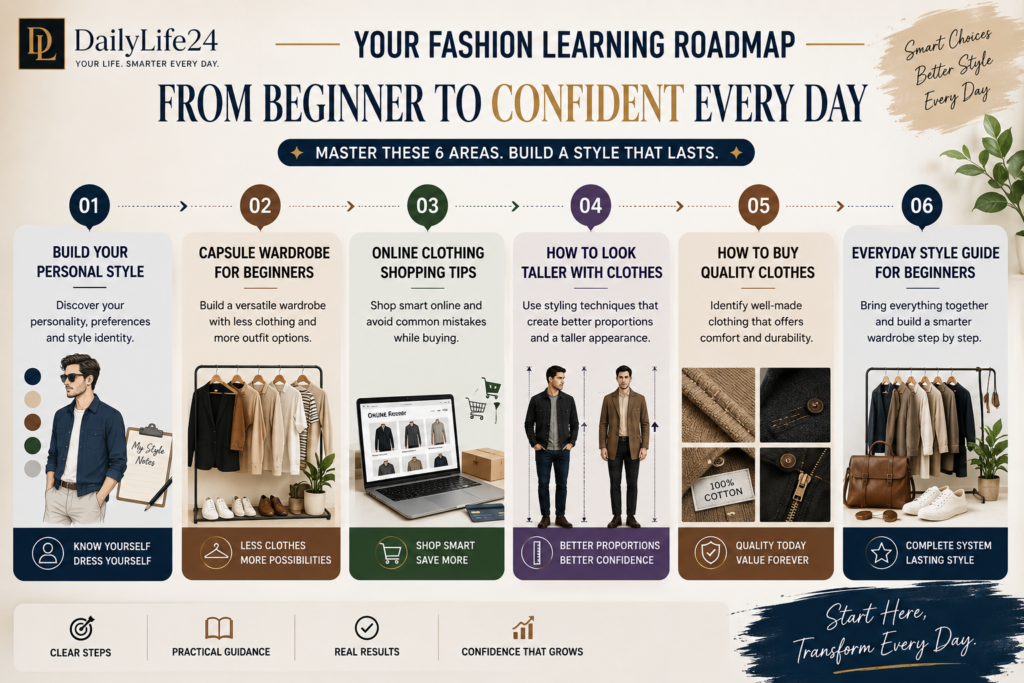
Continue building your fashion knowledge with every guide in this complete learning series:
Build Your Personal Style – Learn how to discover a style that reflects your personality, lifestyle, and everyday clothing preferences.
Capsule Wardrobe for Beginners – Build a versatile wardrobe with fewer pieces that work together in multiple outfit combinations.
Online Clothing Shopping Tips – Make smarter online purchases by comparing products, checking sizing, and avoiding common buying mistakes.
How to Look Taller With Clothes – Discover practical styling techniques that create balanced proportions and a taller visual appearance.
How to Buy Quality Clothes – Learn how to identify durable fabrics, strong construction, and long-lasting garments before making a purchase.
Editorial Note
Editorial Note: This guide has been created exclusively for DailyLife24 using original educational content and the DailyLife24 Style System. Rather than repeating commonly available fashion advice, this article presents a structured learning approach that connects wardrobe planning, clothing quality, shopping habits, personal style, and everyday outfit decisions into one practical framework. Individual preferences, lifestyles, and clothing needs vary, so readers should adapt these recommendations to build a wardrobe that works best for their own daily lives.