

Searching for EMDR therapy near me is often the first step people take when they’re ready to heal from trauma, anxiety, PTSD, or distressing life experiences. Rather than simply managing symptoms, EMDR therapy near me focuses on helping your brain process painful memories so they no longer have the same emotional impact.
Unlike traditional talk therapy, Eye Movement Desensitization and Reprocessing (EMDR) uses structured techniques that allow the brain to reprocess traumatic memories in a healthier way. Today, EMDR is recognized by organizations such as the World Health Organization (WHO), the American Psychological Association (APA), and the U.S. Department of Veterans Affairs as an evidence-based treatment for trauma-related conditions.
Whether you’re looking for the best EMDR therapist near me, wondering how much EMDR therapy near me costs, or trying to find an EMDR therapist that accepts Medicaid or insurance, this guide answers the questions people across the United States search every day.
By the end of this article, you’ll understand how EMDR works, who it’s recommended for, how to choose the right therapist, expected costs, insurance coverage, success rates, and what you should expect before, during, and after your first session.
Quick Facts About EMDR Therapy
| Topic | Details |
| Full Name | Eye Movement Desensitization and Reprocessing (EMDR) |
| Primary Purpose | Treat trauma and distressing memories |
| Developed By | Dr. Francine Shapiro |
| First Introduced | 1987 |
| Commonly Treats | PTSD, anxiety, panic attacks, phobias, childhood trauma, grief, emotional abuse |
| Session Length | 60–90 minutes |
| Average Sessions Needed | 6–12 (varies by individual) |
| Insurance Coverage | Often covered by private insurance and some Medicaid plans |
| Suitable for Children | Yes, with trained pediatric EMDR therapists |
| Available Online | Yes, through licensed providers in many U.S. states |
Table of Contents
- What Is EMDR Therapy Near Me?
- How Does EMDR Therapy Work?
- Why More Americans Are Searching for EMDR Therapy Near Me
- Conditions EMDR Can Help Treat
- The Eight Stages of EMDR Therapy
- Benefits of EMDR Therapy
- How to Choose the Best EMDR Therapist Near You
- EMDR Therapy Cost
- Insurance and Medicaid Coverage
- Online vs In-Person EMDR Therapy
- EMDR Therapy for Children
- Possible Risks and Side Effects
- What to Expect During Your First Session
- Frequently Asked Questions
- Final Thoughts
What Is EMDR Therapy Near Me?
When people search for EMDR therapy near me, they’re usually looking for a licensed mental health professional trained in Eye Movement Desensitization and Reprocessing. Unlike general counseling, EMDR is a specialized psychotherapy designed to help the brain process traumatic experiences that continue affecting daily life.
Traumatic memories sometimes become “stuck” in the brain’s memory network. As a result, reminders of those experiences may trigger anxiety, panic, nightmares, emotional distress, or physical reactions long after the original event has passed.
EMDR doesn’t erase those memories. Instead, it changes how the brain stores and responds to them.
During treatment, the therapist guides you through carefully structured phases while using bilateral stimulation, most commonly guided eye movements, alternating sounds, or gentle tapping. This process helps the brain gradually reduce the emotional intensity attached to traumatic memories.
Many people compare the experience to reorganizing an overfilled filing cabinet. The memories remain, but they are stored in a healthier way that no longer overwhelms everyday life.
Today, EMDR has become one of the most researched trauma therapies in the world. It is commonly recommended for individuals experiencing:
- Post-Traumatic Stress Disorder (PTSD)
- Anxiety disorders
- Panic attacks
- Childhood trauma
- Emotional abuse
- Grief and loss
- Phobias
- Distressing life events
- Medical trauma
- Military trauma
Because awareness has increased significantly over the past few years, searches for EMDR therapy near me continue growing throughout the United States as more people seek evidence-based mental health treatment.
Why More People Search for EMDR Therapy Near Me
Mental health awareness has changed dramatically in recent years. Instead of viewing therapy as a last resort, many people now see it as an important part of overall health.
Several factors have contributed to the increasing popularity of EMDR therapy near me.
Increased Awareness of Trauma
Many people are now recognizing that trauma isn’t limited to major accidents or military combat. Emotional neglect, bullying, relationship abuse, childhood experiences, workplace stress, and medical emergencies can all leave lasting psychological effects.
As awareness grows, more individuals are searching for local therapists who specialize in trauma-focused care.
Evidence-Based Success
Unlike many alternative therapies, EMDR has decades of scientific research supporting its effectiveness.
Major health organizations recognize EMDR as an evidence-based treatment for trauma, particularly PTSD. This has increased confidence among both healthcare professionals and patients.
Faster Results for Some Individuals
Traditional talk therapy may require discussing painful memories repeatedly over many months.
While every person responds differently, some individuals experience noticeable improvements after only several EMDR sessions because treatment focuses on processing memories rather than repeatedly analyzing them.
Better Access to Local Therapists
The availability of licensed EMDR providers has expanded significantly across the United States.
Today, people can search for:
- Best EMDR therapist near me
- Affordable EMDR therapy near me
- EMDR therapy near me that takes insurance
- EMDR therapy near me Medicaid
- Online EMDR therapy
- EMDR therapy near me for kids
This improved accessibility has made specialized trauma treatment available to far more communities than ever before.
Conditions That EMDR Therapy Can Help Treat
Although EMDR is most commonly associated with PTSD, research suggests it may help many other conditions when provided by a qualified therapist.
| Condition | Can EMDR Help? |
| PTSD | ✅ Yes |
| Anxiety Disorders | ✅ Yes |
| Panic Attacks | ✅ Yes |
| Childhood Trauma | ✅ Yes |
| Emotional Abuse | ✅ Yes |
| Grief and Loss | ✅ Yes |
| Specific Phobias | ✅ Yes |
| Medical Trauma | ✅ Yes |
| Stress-Related Disorders | ✅ Yes |
| Performance Anxiety | ✅ Sometimes |
| Depression (with trauma history) | ✅ In some cases |
Your therapist will determine whether EMDR is appropriate after conducting a complete clinical assessment. Not every individual is an ideal candidate immediately, and some people may benefit from stabilization techniques or other therapies before beginning trauma processing.
Understanding whether EMDR therapy near me matches your needs is one of the most important steps before scheduling your first appointment. In the next section, we’ll explain exactly how EMDR works inside the brain, walk through all eight treatment phases, and explore why this therapy continues to produce positive results for many people recovering from trauma.
How Does EMDR Therapy Work?
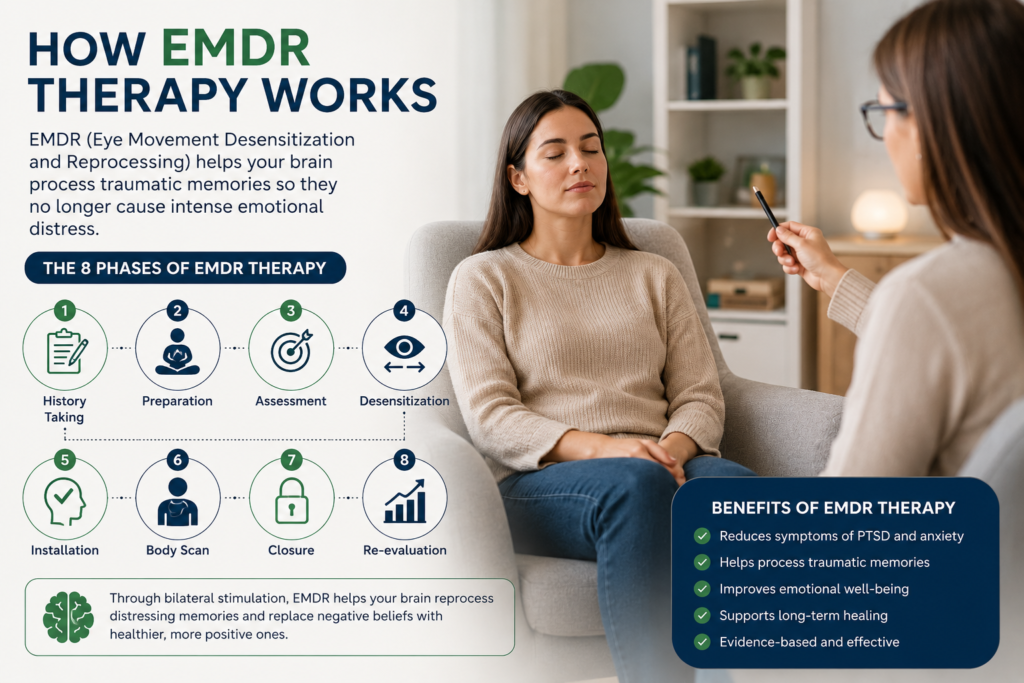
One of the biggest reasons people search for EMDR therapy near me is to understand how this unique form of therapy actually works. Unlike traditional counseling, EMDR doesn’t rely solely on talking about traumatic experiences. Instead, it helps your brain process distressing memories so they no longer trigger the same emotional or physical reactions.
When a traumatic event occurs, the brain may struggle to process the experience normally. As a result, the memory can become “stuck” along with the emotions, thoughts, physical sensations, and beliefs associated with that event.
Whenever something reminds you of the trauma, your brain reacts as though the danger is happening again, even if you’re completely safe.
EMDR helps break this cycle.
During therapy, your therapist guides you through specific memories while using bilateral stimulation. This may involve moving your eyes from side to side, listening to alternating sounds through headphones, or feeling gentle taps on each side of your body.
Researchers believe this process helps the brain reorganize traumatic memories so they become part of your normal memory system rather than remaining emotionally overwhelming.
Instead of forgetting what happened, you remember the event without experiencing the same level of fear, panic, or emotional distress.
Many clients describe the experience by saying:
- “The memory is still there, but it no longer controls me.”
- “I can think about it without feeling overwhelmed.”
- “It feels like my brain finally finished processing what happened.”
The Science Behind EMDR Therapy
Scientists continue studying exactly why EMDR is so effective, but several theories explain its success.
One leading theory suggests bilateral stimulation activates both sides of the brain while the traumatic memory is being recalled. This allows the brain to process information more efficiently and store the memory in a healthier way.
Another theory compares EMDR to what happens during Rapid Eye Movement (REM) sleep, when the brain naturally processes emotions and memories from the day.
Although researchers continue investigating the precise neurological mechanisms, dozens of clinical studies have demonstrated that EMDR significantly reduces symptoms for many people living with trauma-related conditions.
Because of this growing body of evidence, EMDR is recommended by several respected organizations, including:
- World Health Organization (WHO)
- American Psychological Association (APA)
- U.S. Department of Veterans Affairs (VA)
- International Society for Traumatic Stress Studies (ISTSS)
This scientific support has contributed to the growing number of people searching for EMDR therapy near me across the United States.
The Eight Stages of EMDR Therapy
Every licensed therapist follows a structured treatment process. Understanding these stages can help reduce anxiety before your first appointment.
Stage 1: History Taking
Your therapist begins by learning about your background, current symptoms, medical history, and treatment goals.
Together, you’ll identify the experiences that continue affecting your daily life and decide which memories should be addressed during therapy.
This stage also helps determine whether EMDR therapy near me is the right treatment for your specific situation.
Stage 2: Preparation
Before processing any traumatic memories, your therapist teaches coping strategies to help you stay emotionally grounded throughout treatment.
These may include:
- Deep breathing exercises
- Safe-place visualization
- Relaxation techniques
- Emotional regulation skills
- Grounding exercises
Preparation helps ensure you feel safe and confident before beginning memory processing.
Stage 3: Assessment
During this stage, you’ll identify one specific memory to target.
Your therapist will ask about:
- Images connected to the memory
- Negative beliefs
- Desired positive beliefs
- Physical sensations
- Emotional intensity
This creates a clear starting point for treatment.
Stage 4: Desensitization
This is the stage most people associate with EMDR.
While thinking about the selected memory, you’ll follow your therapist’s hand movements or another form of bilateral stimulation.
Over time, the emotional intensity connected to the memory gradually decreases.
Some people notice changes within one session, while others require additional sessions depending on the complexity of their trauma.
Stage 5: Installation
After reducing emotional distress, the therapist helps strengthen healthier beliefs.
For example:
Instead of:
“I am powerless.”
You may gradually replace it with:
“I am safe now.”
or
“I did the best I could.”
This stage helps build confidence and emotional resilience.
Stage 6: Body Scan
Trauma often affects the body as well as the mind.
Your therapist asks you to notice any remaining physical tension while thinking about the memory.
If discomfort remains, additional processing may continue until the body also feels calmer.
Stage 7: Closure
Every session ends with stabilization.
Regardless of whether the memory has been fully processed, your therapist ensures you leave the appointment feeling emotionally balanced.
You may also receive relaxation exercises to practice between sessions.
Stage 8: Re-Evaluation
At your next appointment, the therapist reviews your progress.
Together, you’ll evaluate:
- Remaining symptoms
- Emotional changes
- New insights
- Future treatment goals
This ongoing assessment helps ensure therapy continues moving in a positive direction.
How Long Does EMDR Therapy Take?
One of the most common questions people ask after searching for EMDR therapy near me is how long treatment lasts.
The answer depends on several factors, including:
- The type of trauma
- Number of traumatic experiences
- Current emotional health
- Support system
- Individual response to therapy
Here’s a general timeline.
| Condition | Typical Number of Sessions |
| Single traumatic event | 6–8 sessions |
| Moderate trauma | 8–12 sessions |
| Childhood trauma | 12–20+ sessions |
| Complex PTSD | Several months |
| Ongoing anxiety with trauma | Individualized treatment |
Each session usually lasts between 60 and 90 minutes.
Some individuals experience significant improvements within just a few appointments, while others benefit from longer-term treatment. Healing isn’t a race, and your therapist will adjust the pace according to your needs.
Does EMDR Therapy Really Work?
Research continues to show encouraging results for people living with trauma-related conditions.
Clinical studies have found that many individuals experience meaningful reductions in PTSD symptoms, anxiety, emotional distress, and intrusive memories after completing EMDR treatment.
However, success depends on several factors, including:
- Working with a qualified therapist
- Attending sessions consistently
- Following treatment recommendations
- Being emotionally ready for trauma processing
- Having realistic expectations
EMDR isn’t a miracle cure, but for many people, it becomes an important step toward long-term emotional recovery and improved quality of life.
How to Choose the Best EMDR Therapist Near You
Finding the right therapist is one of the most important steps after searching for EMDR therapy near me. Not every mental health professional is trained in EMDR, and even among certified therapists, experience and specialties can vary significantly.
A qualified EMDR therapist should not only understand the treatment process but also create a safe, supportive environment where you feel comfortable discussing difficult experiences. Since trauma therapy often involves vulnerable emotions, choosing the right professional can greatly influence your recovery journey.
Before scheduling your first appointment, take time to research potential therapists, read patient reviews, verify credentials, and ask questions about their experience with your specific concerns.
Qualifications to Look For
A reputable EMDR therapist should have:
- A valid state license
- Formal EMDR training
- Experience treating trauma-related conditions
- Continuing education in trauma-informed care
- Positive patient reviews
- Clear communication about treatment expectations
Some therapists also hold certification through the EMDR International Association (EMDRIA), which demonstrates additional specialized training and adherence to professional standards.
Questions to Ask Before Booking an Appointment
Choosing the right therapist is about more than credentials. Asking the right questions helps ensure you’re selecting someone who matches your needs.
Consider asking:
- How long have you been practicing EMDR therapy?
- Are you EMDRIA certified?
- What types of trauma do you specialize in?
- How many EMDR clients have you treated?
- Do you accept my insurance?
- Is telehealth available?
- How long is each session?
- What happens during the first appointment?
- What should I do between sessions?
- How do you measure treatment progress?
A professional therapist should welcome these questions and provide clear, honest answers.
Choosing the right EMDR therapist is one of the most important decisions in your healing journey. Before scheduling your first appointment, prepare a list of questions to ensure the therapist matches your goals and comfort level.
Consider asking:
- Are you EMDRIA certified?
- How many years have you practiced EMDR?
- Have you treated PTSD and anxiety cases similar to mine?
- Do you accept my insurance or Medicaid?
- What is the average treatment plan?
- Do you offer online EMDR therapy?
- How long are your sessions?
- What happens if I become emotionally overwhelmed?
- What techniques do you combine with EMDR?
- What results should I realistically expect?
The answers to these questions can help you compare providers and choose a therapist who is experienced, compassionate, and qualified to guide your recovery.
Red Flags When Choosing an EMDR Therapist
Not every provider advertising EMDR therapy near me offers the same level of expertise.
Be cautious if a therapist:
- Cannot explain the eight phases of EMDR.
- Guarantees immediate results.
- Pressures you into treatment.
- Avoids discussing qualifications.
- Doesn’t perform an initial assessment.
- Lacks experience treating trauma.
- Makes unrealistic promises about “curing” PTSD quickly.
Trauma recovery takes time, and ethical therapists set realistic expectations while tailoring treatment to each individual.
How Much Does EMDR Therapy Cost?
One of the most searched questions is:
“How much does EMDR therapy near me cost?”
The answer depends on several factors, including your location, the therapist’s experience, insurance coverage, and session length.
Below is a general estimate across the United States.
| Session Type | Average Cost |
| Initial Consultation | $100–$250 |
| Standard EMDR Session | $100–$250 |
| Experienced Specialist | $200–$350 |
| Private Practice | $150–$300 |
| Online EMDR Therapy | $80–$220 |
Major metropolitan areas generally have higher therapy costs than smaller cities and rural communities.
Although price is important, choosing the least expensive therapist isn’t always the best decision. Experience, qualifications, and comfort level should also influence your choice.
Is EMDR Therapy Covered by Insurance?
Many people searching for EMDR therapy near me that takes insurance are relieved to learn that coverage is often available.
Many private insurance companies reimburse EMDR therapy when it is considered medically necessary and provided by an in-network licensed mental health professional.
Coverage varies depending on:
- Your insurance provider
- Individual health plan
- Therapist’s network status
- State regulations
Before scheduling your appointment, contact both your insurance company and the therapist’s office to verify:
- Coverage eligibility
- Copay amount
- Deductible requirements
- Session limits
- Referral requirements
Understanding these details beforehand can help prevent unexpected costs.
Does Medicaid Cover EMDR Therapy?
Coverage for EMDR therapy near me Medicaid depends on your state’s Medicaid program.
Many Medicaid plans cover trauma-focused psychotherapy, including EMDR, when provided by an approved licensed clinician.
However, not every EMDR therapist accepts Medicaid.
When contacting providers, ask:
- Do you accept Medicaid?
- Which Medicaid plans are accepted?
- Is prior authorization required?
- Are virtual appointments covered?
Some community mental health centers also offer trauma therapy services at reduced costs for eligible patients.
Affordable and Free EMDR Therapy Options
If cost is a concern, several options may help make treatment more accessible.
You may qualify for:
- Community mental health clinics
- University psychology training clinics
- Nonprofit counseling centers
- Sliding-scale private practices
- Employee Assistance Programs (EAP)
- Veterans Affairs (VA) mental health services
- Local nonprofit trauma organizations
Some therapists also reserve a limited number of reduced-fee appointments for clients experiencing financial hardship.
EMDR Therapy Near Me for Kids
Children can experience trauma just as adults do, and EMDR has been adapted successfully for younger age groups.
Pediatric EMDR therapists use age-appropriate techniques such as:
- Play therapy
- Drawing activities
- Storytelling
- Visual aids
- Parent involvement
Children may benefit from EMDR following experiences such as:
- Abuse or neglect
- Bullying
- Serious accidents
- Medical procedures
- Natural disasters
- Loss of a loved one
- Family violence
Parents searching for EMDR therapy near me for kids should choose therapists who have specialized training in child and adolescent trauma.
Online vs. In-Person EMDR Therapy
Technology has made trauma treatment more accessible than ever before.
Many licensed therapists now provide secure telehealth EMDR sessions for clients who cannot attend in person.
Here’s a comparison.
| Feature | Online EMDR | In-Person EMDR |
| Convenience | Excellent | Moderate |
| Travel Required | No | Yes |
| Privacy at Home | Required | Office Setting |
| Insurance Coverage | Often Available | Often Available |
| Suitable for Rural Areas | Excellent | Limited |
| Therapist Interaction | Video-Based | Face-to-Face |
Research suggests online EMDR can be effective for many individuals when conducted by a qualified therapist using secure telehealth platforms.
The best option depends on your comfort level, internet access, privacy, and therapist availability.
What Happens During Your First EMDR Appointment?
Many people feel nervous before their first therapy session, but understanding what to expect can reduce anxiety.
Your first appointment usually focuses on getting to know you rather than immediately processing traumatic memories.
During the initial session, your therapist will typically:
- Review your medical and mental health history.
- Discuss your current symptoms.
- Identify treatment goals.
- Explain how EMDR works.
- Assess whether EMDR is appropriate for your situation.
- Teach basic grounding techniques if needed.
Most therapists spend time building trust before beginning trauma processing.
Establishing a strong therapeutic relationship helps create a safe environment where healing can take place gradually and at a pace that feels manageable for you.
Is EMDR Therapy Safe?
One of the most common questions people ask after searching for EMDR therapy near me is whether the treatment is safe.
For most individuals, the answer is yes. EMDR is considered a safe, evidence-based psychotherapy when provided by a licensed and properly trained mental health professional. It has been extensively researched for more than three decades and is recommended by organizations such as the World Health Organization (WHO), the American Psychological Association (APA), and the U.S. Department of Veterans Affairs.
Unlike medication, EMDR doesn’t involve drugs or invasive procedures. Instead, it helps your brain naturally process traumatic memories through structured therapeutic techniques.
However, because EMDR involves revisiting difficult experiences, it’s normal to experience temporary emotional discomfort during or shortly after a session. This is often a sign that the brain is actively processing unresolved memories.
Your therapist will teach grounding and emotional regulation techniques to help you manage these feelings throughout treatment.
Possible Side Effects of EMDR Therapy
Although EMDR is generally well tolerated, some people notice temporary side effects while their brain processes traumatic memories.
Common short-term reactions include:
- Emotional exhaustion
- Temporary increase in anxiety
- Vivid dreams
- Headaches
- Fatigue
- Emotional sensitivity
- Tearfulness
- Increased awareness of memories
- Temporary sleep disturbances
These reactions usually improve within a day or two after treatment.
Every person responds differently, and your therapist will monitor your progress throughout the treatment process.
What Should You Do After an EMDR Session?
Many people wonder what happens once therapy ends for the day.
Your brain often continues processing memories even after you leave the therapist’s office.
To support recovery, many therapists recommend:
- Drinking plenty of water
- Getting a full night’s sleep
- Avoiding unnecessary stress when possible
- Writing in a journal if emotions arise
- Practicing grounding exercises
- Taking a short walk
- Avoiding alcohol or recreational drugs immediately after therapy
- Contacting your therapist if unexpected concerns develop
Giving yourself time to rest allows your mind and body to continue processing the work completed during the session.
Who Should Avoid EMDR Therapy?
Although EMDR helps many people, it isn’t appropriate for every situation.
Your therapist may recommend postponing EMDR if you are currently experiencing:
- Active psychosis
- Severe untreated substance dependence
- Immediate suicidal crisis
- Uncontrolled dissociation
- Serious neurological instability
- Lack of emotional stabilization following recent trauma
This doesn’t necessarily mean you’ll never be able to receive EMDR.
In many cases, therapists first focus on building coping skills and emotional stability before beginning trauma processing.
A thorough clinical assessment helps determine the safest treatment approach for your individual circumstances.
What Is the Success Rate of EMDR Therapy?
One reason EMDR therapy near me continues to grow in popularity is its strong research support.
Numerous clinical studies have reported significant improvements for individuals receiving EMDR, particularly those experiencing post-traumatic stress disorder (PTSD).
While success rates vary depending on the individual, many people report:
- Reduced trauma symptoms
- Less anxiety
- Fewer intrusive memories
- Improved sleep
- Better emotional regulation
- Increased confidence
- Improved quality of life
Your results depend on factors such as:
- Type of trauma
- Duration of symptoms
- Overall mental health
- Commitment to therapy
- Experience of your therapist
Healing isn’t identical for everyone, but many individuals experience meaningful progress over time.
Common Myths About EMDR Therapy
Several misconceptions prevent people from seeking treatment.
Let’s separate myths from facts.
| Myth | Reality |
| EMDR erases memories. | The memories remain, but they become less emotionally distressing. |
| EMDR is hypnosis. | EMDR is a structured psychotherapy, not hypnosis. |
| EMDR only works for PTSD. | It may also help anxiety, phobias, grief, panic attacks, and other trauma-related conditions. |
| EMDR works in one session. | Treatment length varies depending on individual needs. |
| EMDR is dangerous. | When performed by a trained therapist, EMDR is considered safe and evidence-based. |
| Talking isn’t necessary. | Discussion still plays an important role throughout treatment. |
Signs EMDR Therapy Is Working
Progress isn’t always dramatic after the first appointment.
Instead, improvements often happen gradually.
Positive signs may include:
- Fewer flashbacks
- Less emotional distress
- Better sleep
- Reduced anxiety
- Increased confidence
- Improved relationships
- Better concentration
- Feeling calmer when recalling difficult memories
- Greater emotional control
- More optimism about the future
These changes often build over multiple sessions rather than appearing overnight.
EMDR Therapy vs. Other Trauma Treatments
Many people compare EMDR with other forms of psychotherapy before choosing a provider.
| Treatment | Primary Focus | Best For |
| EMDR | Processing traumatic memories | PTSD, trauma, anxiety |
| Cognitive Behavioral Therapy (CBT) | Changing negative thought patterns | Anxiety, depression |
| Talk Therapy | Emotional support and discussion | General mental health concerns |
| Exposure Therapy | Gradual exposure to fears | Phobias and PTSD |
| Somatic Therapy | Mind-body connection | Trauma stored in the body |
Each treatment has advantages, and some therapists combine multiple approaches depending on your needs.
Tips for Finding the Best EMDR Therapy Near Me
If you’re ready to begin treatment, keep these practical tips in mind.
- Verify the therapist’s professional license.
- Ask whether they have formal EMDR training.
- Read verified patient reviews.
- Confirm insurance acceptance before scheduling.
- Ask about virtual appointment options.
- Compare consultation fees.
- Choose someone experienced with your specific concerns.
- Don’t hesitate to meet with more than one therapist before deciding.
Finding the right therapist may take a little time, but establishing trust is one of the most important factors in successful trauma recovery.
Latest Research and Future of EMDR Therapy
Research into EMDR continues expanding every year.
Scientists are exploring its effectiveness for:
- Complex PTSD
- Chronic pain
- Depression related to trauma
- First responders
- Veterans
- Survivors of domestic violence
- Children and adolescents
- Medical trauma
- Performance anxiety
- Grief-related disorders
As new studies emerge, EMDR continues gaining recognition as one of the leading evidence-based treatments for trauma recovery.
How to Find EMDR Therapy Near Me in Your Area
Finding the right EMDR therapy near me starts with choosing a licensed mental health professional who specializes in trauma treatment. While many therapists advertise EMDR services, it’s important to verify their qualifications, experience, and insurance participation before scheduling your first appointment.
Start by searching professional therapist directories, checking state licensing boards, and reading verified patient reviews. If you have health insurance or Medicaid, contact your provider to request a list of in-network EMDR therapists. Many clinics also offer online scheduling, virtual consultations, and telehealth appointments if there isn’t a provider close to your location.
When comparing therapists, consider these factors:
- EMDR-specific training and certification
- Years of trauma treatment experience
- Insurance and Medicaid acceptance
- Telehealth availability
- Patient reviews and ratings
- Session costs and payment options
- Availability for new patients
- Areas of specialization such as PTSD, anxiety, childhood trauma, or veterans
Taking time to compare providers can help you find an experienced therapist who fits both your clinical needs and your budge
Frequently Asked Questions
1. Is EMDR therapy typically covered by insurance?
Yes, many private insurance companies cover EMDR therapy when it’s provided by a licensed mental health professional and considered medically necessary. Coverage varies by insurer, so it’s important to verify your benefits before scheduling an appointment.
2. Does Medicaid cover EMDR therapy?
Some state Medicaid programs cover EMDR therapy, but coverage depends on your state, your specific Medicaid plan, and whether the therapist accepts Medicaid. Always contact both your provider and therapist to confirm eligibility.
3. How much does EMDR therapy cost?
The average cost of an EMDR session in the United States ranges from $100 to $250. Experienced specialists or clinics in larger cities may charge more, while community clinics and sliding-scale practices often offer lower rates.
4. How many EMDR sessions do you usually need?
Treatment varies from person to person. A single traumatic event may require 6–8 sessions, while complex trauma or PTSD may require 12–20 sessions or more depending on individual progress.
5. What is EMDR therapy recommended for?
EMDR is commonly recommended for PTSD, anxiety disorders, panic attacks, childhood trauma, emotional abuse, grief, phobias, medical trauma, and other distressing life experiences. A licensed therapist will determine whether it’s appropriate for your situation.
6. Who is not suited for EMDR?
Some individuals experiencing active psychosis, severe untreated substance dependence, immediate suicidal crises, or significant emotional instability may need stabilization before beginning EMDR. A thorough clinical assessment helps determine the safest treatment plan.
7. Can EMDR help with anxiety?
Yes. Many therapists use EMDR to help individuals whose anxiety is connected to traumatic or distressing experiences. Research suggests many people experience reduced anxiety after completing treatment.
8. What happens during an EMDR session?
Your therapist guides you through specific memories while using bilateral stimulation, such as eye movements, tapping, or alternating sounds. The goal is to help your brain process traumatic memories more effectively.
9. Does EMDR release trapped emotions?
Many people report experiencing emotional release during therapy as unresolved memories are processed. While everyone’s experience is different, emotional reactions are a normal part of healing for many clients.
10. Is online EMDR therapy effective?
Yes. Studies suggest online EMDR can be effective when conducted by a qualified, licensed therapist using secure telehealth platforms. Your therapist will determine whether virtual treatment is appropriate for your needs.
11. Can children receive EMDR therapy?
Yes. Specially trained pediatric EMDR therapists adapt treatment for children using age-appropriate techniques such as play, drawing, storytelling, and parent involvement.
12. What should I do after an EMDR session?
After a session, it’s helpful to stay hydrated, get adequate rest, avoid unnecessary stress, practice grounding exercises, and monitor any emotional changes. Your therapist may also recommend journaling between appointments.
13. Is EMDR better than traditional talk therapy?
Neither therapy is universally better. EMDR focuses on reprocessing traumatic memories, while traditional talk therapy emphasizes discussion, emotional support, and behavioral change. Your therapist may recommend one approach or combine multiple therapies depending on your goals.
14. How do I choose the best EMDR therapist near me?
Look for a licensed therapist with formal EMDR training, trauma experience, positive reviews, and clear communication. It’s also helpful to verify insurance acceptance and ask about their experience treating conditions similar to yours.
15. Is EMDR therapy worth trying?
For many individuals living with trauma-related symptoms, EMDR has been shown to reduce emotional distress and improve quality of life. When provided by a qualified professional, it remains one of the most researched and evidence-based trauma therapies available.
Final Thoughts
Searching for EMDR therapy near me is more than finding a nearby therapist—it’s about taking an important step toward emotional healing and long-term mental wellness. Whether you’re coping with PTSD, anxiety, childhood trauma, grief, or another difficult experience, EMDR offers an evidence-based approach that has helped millions of people worldwide.
Choosing the right therapist is just as important as choosing the right treatment. Take time to verify credentials, understand costs, confirm insurance coverage, and ask questions before beginning therapy. Remember that healing is a personal journey, and progress looks different for everyone.
If you’re ready to move forward, working with a qualified EMDR therapist may help you process painful memories, build healthier coping skills, and regain confidence in your daily life.
Whether you’re searching for EMDR therapy near me, comparing local providers, checking insurance coverage, or simply learning more about trauma recovery, taking the first step toward professional support can make a meaningful difference. With the right licensed therapist, evidence-based treatment, and realistic expectations, EMDR may help you move beyond painful memories and regain greater emotional well-being.
Visit DailyLife24
If you found this guide helpful, explore more expert-written articles on DailyLife24 covering mental health, wellness, nutrition, fitness, lifestyle, and practical health advice. Our goal is to provide reliable, easy-to-understand information that helps you make informed decisions for a healthier and happier life.
Editorial Note
Editorial Note: This article has been researched and compiled using publicly available information from official websites, verified organizations, reputable news publications, interviews, public records, peer-reviewed studies, and other trusted online sources. While we make every effort to ensure accuracy, information such as treatment recommendations, costs, insurance coverage, and clinical guidelines may change over time. This content is provided for educational and informational purposes only and should not replace professional medical advice, diagnosis, or treatment. Always consult a qualified healthcare provider or licensed mental health professional regarding your individual health needs.
References
For accuracy and evidence-based information, this article was researched using trusted sources, including:
- World Health Organization (WHO)
- American Psychological Association (APA)
- National Institutes of Health (NIH)
- U.S. Department of Veterans Affairs (VA)
- EMDR International Association (EMDRIA)
- Mayo Clinic
- Cleveland Clinic
- Beck Institute
- Peer-reviewed clinical studies on EMDR therapy