
Many women are interested in creatine because of its proven benefits for strength, exercise performance, and recovery. Yet one question continues to appear in search results, fitness communities, and social media discussions: Are there any creatine side effects for women? Concerns about hair loss, kidney damage, bloating, acne, and weight gain often discourage women from trying one of the most researched sports supplements available.
The good news is that current scientific evidence paints a very different picture from many online myths. While creatine side effects for women can occur in certain situations, most healthy women tolerate creatine well when they use the recommended dosage and choose a high-quality supplement. Understanding which concerns are supported by research—and which are based on misconceptions—can help you make an informed decision.
This guide examines the most common creatine side effects for women, separates facts from myths, explains who should avoid creatine, and reviews what current research says about its long-term safety. If you’re new to creatine, you may also want to read our complete Creatine for Women guide to understand how the supplement works before exploring its potential side effects.
Quick Facts About Creatine Side Effects for Women
| Topic | Summary |
| Is creatine safe? | Generally safe for healthy women when used as directed |
| Most common concern | Temporary water retention in some individuals |
| Hair loss | No strong evidence that creatine directly causes hair loss in women |
| Kidney damage | No evidence in healthy individuals using recommended doses |
| Liver damage | Current research does not support this claim in healthy adults |
| Acne | No proven link between creatine and acne |
| Weight gain | Usually related to water stored in muscles, not body fat |
| Long-term use | Supported by extensive research in healthy adults |
| Best way to reduce risk | Follow the recommended dosage and stay hydrated |
Table of Contents
- Is Creatine Safe for Women?
- Common Creatine Side Effects for Women
- Does Creatine Cause Hair Loss?
- Does Creatine Cause Kidney Damage?
- Does Creatine Affect the Liver?
- Can Creatine Cause Acne?
- Does Creatine Cause Weight Gain?
- Water Retention vs. Fat Gain
- Who Should Avoid Creatine?
- Is Creatine Safe for Long-Term Use?
- When Should You Stop Taking Creatine?
- Frequently Asked Questions
Is Creatine Safe for Women?
For most healthy adults, research consistently shows that creatine is one of the safest and most extensively studied dietary supplements available. Hundreds of clinical studies have examined its effects across different age groups, athletic populations, and recreational exercisers.
Despite its strong safety profile, concerns about creatine side effects for women remain common. Many of these concerns come from outdated information, internet rumors, or confusion between creatine and other performance-enhancing substances. Creatine is naturally produced by the body and is also found in foods such as red meat and fish.
When taken at recommended doses, creatine helps replenish phosphocreatine stores inside muscle cells, supporting the production of adenosine triphosphate (ATP), the body’s primary source of energy for short, high-intensity activities. This process is well understood and has been evaluated in numerous scientific studies.
For healthy women who follow recommended supplementation guidelines, the risk of serious creatine side effects for women is considered low. However, individual factors such as existing medical conditions, prescription medications, or pregnancy may require medical advice before starting supplementation.
Common Creatine Side Effects for Women
Most women who take creatine experience few, if any, noticeable side effects. When side effects do occur, they are usually mild, temporary, and often related to how the supplement is used rather than the creatine itself.
Understanding the most commonly reported creatine side effects for women can help set realistic expectations and reduce unnecessary concern.
Temporary Water Retention
One of the most frequently reported effects is mild water retention during the first week of supplementation, especially after a loading phase.
Creatine increases the amount of water stored inside muscle cells. This is different from fluid retention under the skin and is considered a normal physiological response rather than a harmful side effect.
Mild Digestive Discomfort
Some women may experience:
- Stomach discomfort.
- Mild bloating.
- Nausea.
- Loose stools.
These symptoms are more likely when large doses are taken at once. Dividing servings or avoiding unnecessary loading phases often reduces digestive discomfort.
Small Increase in Body Weight
Some women notice a slight increase on the scale during the first few weeks.
In many cases, this change reflects increased intracellular water rather than body fat. It should not be confused with unhealthy weight gain.
Individual Differences
Every person responds differently to supplements.
Factors that may influence creatine side effects for women include:
- Daily dosage.
- Hydration habits.
- Body size.
- Exercise routine.
- Overall diet.
- Existing medical conditions.
For most healthy women, following recommended supplementation guidelines greatly reduces the likelihood of experiencing unwanted side effects.
Why Are There So Many Myths About Creatine Side Effects for Women?
One reason creatine side effects for women continue to be misunderstood is that creatine is often grouped together with supplements or substances that have completely different mechanisms and risk profiles.
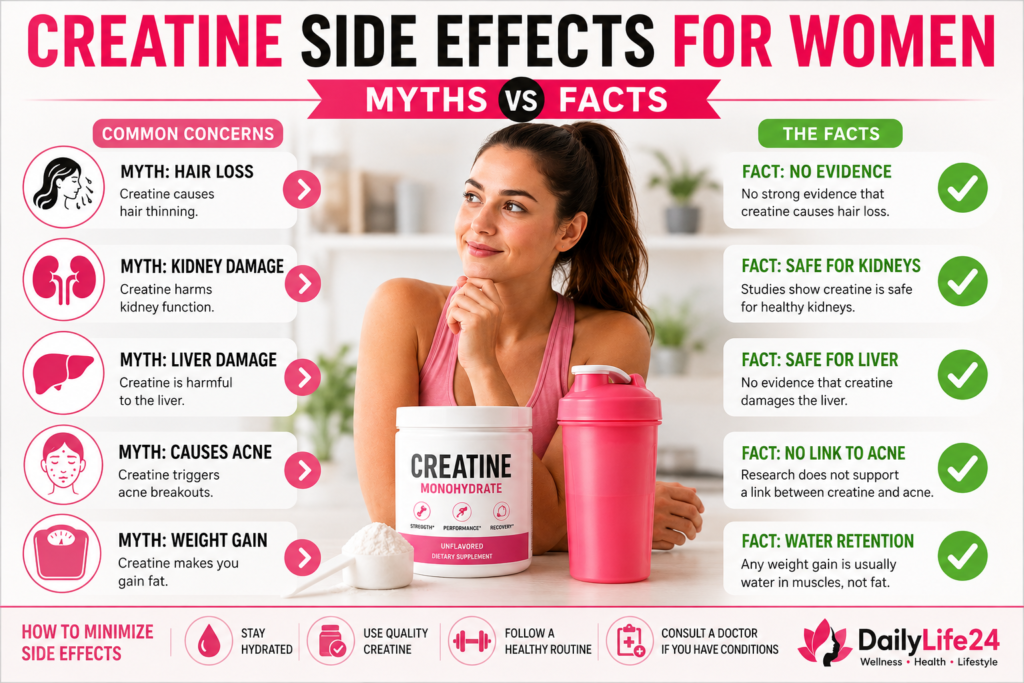
Over the years, internet forums, social media posts, and anecdotal stories have spread claims that creatine causes serious health problems without scientific evidence to support them. As these claims are repeated, they can appear credible even when they’re based on personal experiences rather than controlled research.
Many myths also originate from studies that don’t reflect how healthy women actually use creatine today. For example, concerns about kidney or liver health are frequently based on individuals who already had underlying medical conditions or were taking multiple supplements at the same time.
Understanding the difference between evidence-based research and online speculation is essential when evaluating creatine side effects for women. Throughout the rest of this guide, we’ll examine each common concern individually and compare popular claims with current scientific evidence.
Does Creatine Side Effects for Women Include Hair Loss?
Hair loss is one of the most searched concerns related to creatine side effects for women. Many women hesitate to start creatine because they’ve heard claims that it may increase hair shedding or contribute to thinning hair. However, current scientific evidence doesn’t support the conclusion that creatine directly causes hair loss in healthy women.
The concern largely comes from a single small study involving male rugby players, which reported an increase in dihydrotestosterone (DHT) after a short loading phase. Because DHT has been associated with certain types of hair loss in genetically susceptible individuals, the study sparked years of debate.
Importantly, the researchers did not measure hair loss, hair thinning, or changes in hair growth. They only measured hormone levels, and those findings have not been consistently replicated in larger studies.
Since then, multiple reviews have examined the available evidence and found no convincing proof that creatine supplementation causes hair loss in women.
Why Does the Hair Loss Myth Continue?
Several factors keep this myth alive:
- The original study received widespread attention.
- Social media often repeats unverified claims.
- Hair loss has many possible causes, making creatine an easy target.
- Individual experiences are frequently mistaken for scientific evidence.
Hair thinning in women can result from hormonal changes, genetics, nutritional deficiencies, stress, certain medications, thyroid disorders, or postpartum recovery. These conditions are much more common explanations than creatine supplementation.
Should Women Stop Taking Creatine Because of Hair Loss Concerns?
For healthy women without a diagnosed hair-loss condition, current research doesn’t suggest avoiding creatine solely because of concerns about hair loss.
If you notice unusual hair shedding after starting any supplement, consult a healthcare professional to identify the underlying cause instead of assuming creatine is responsible.
Does Creatine Side Effects for Women Include Kidney Damage?
Another common concern surrounding creatine side effects for women is whether creatine damages the kidneys.
For healthy individuals, extensive scientific research has found no evidence that recommended doses of creatine harm normal kidney function.
This misconception often arises because creatine supplementation can slightly increase blood creatinine levels. Creatinine is a natural breakdown product of creatine metabolism and is commonly measured during kidney function tests.
An increase in blood creatinine after taking creatine doesn’t automatically indicate kidney damage. It simply reflects normal creatine metabolism and should be interpreted within the broader clinical context.
What Does Research Say?
Numerous clinical studies involving athletes, older adults, recreational exercisers, and healthy individuals have evaluated kidney health during both short-term and long-term creatine supplementation.
The overall findings consistently show:
- No reduction in kidney function among healthy adults.
- No evidence of structural kidney damage.
- Good safety when recommended dosages are followed.
- No increased risk when combined with proper hydration.
These findings make creatine one of the most thoroughly researched dietary supplements available today.
Who Should Be Careful?
Although creatine side effects for women are uncommon in healthy adults, some women should seek medical advice before using creatine.
This includes those who:
- Have chronic kidney disease.
- Have significantly reduced kidney function.
- Take medications that affect kidney health.
- Have been advised to limit protein or supplement intake by their physician.
For these individuals, personalized medical guidance is always more appropriate than general recommendations.
Does Creatine Side Effects for Women Affect the Liver?
Another persistent myth is that creatine supplementation damages the liver.
Current scientific evidence doesn’t support this claim in healthy women.
The liver naturally participates in creatine production as part of normal human metabolism. Taking creatine as a dietary supplement doesn’t appear to place harmful stress on a healthy liver when consumed at recommended dosages.
Researchers have evaluated liver enzymes and other markers of liver health in numerous clinical trials. Overall, these studies have not found evidence that standard creatine supplementation causes liver injury in healthy adults.
Why Do Some People Believe Creatine Harms the Liver?
The confusion often comes from reports involving:
- Multiple supplements taken simultaneously.
- Excessive supplement use.
- Undiagnosed liver disease.
- Poor-quality products containing unknown ingredients.
In these situations, it’s difficult to determine whether creatine played any role.
When high-quality creatine monohydrate is used appropriately, the available evidence continues to support its safety.
Supporting Liver Health While Using Creatine
Although research doesn’t indicate that creatine harms a healthy liver, maintaining good overall health is always beneficial.
Simple habits include:
- Eating a balanced diet.
- Staying hydrated.
- Limiting excessive alcohol consumption.
- Following recommended supplement dosages.
- Choosing reputable supplement brands.
These practices support overall wellness regardless of whether you take creatine.
What Research Really Says About Creatine Side Effects for Women
When evaluating creatine side effects for women, it’s important to rely on high-quality scientific evidence rather than isolated anecdotes or internet myths.
Over the past three decades, creatine has become one of the most extensively researched sports nutrition supplements. Studies involving healthy adults, athletes, older individuals, and women have consistently demonstrated a strong safety profile when creatine is used according to recommended guidelines.
Current evidence indicates that most healthy women can use creatine without experiencing serious adverse effects. The side effects that do occur are typically mild, temporary, and manageable through proper dosage, hydration, and consistent use.
Understanding what research actually shows allows women to make informed decisions based on evidence instead of misinformation.
Does Creatine Side Effects for Women Include Acne?
Many women worry that taking creatine could trigger acne or make existing breakouts worse. This concern often appears in online discussions, but scientific research has not established a direct link between creatine supplementation and acne.
Unlike anabolic steroids or certain hormonal medications, creatine does not directly alter hormone levels in a way that has been proven to increase acne development. Most healthy women who use creatine at recommended dosages do not experience skin problems because of the supplement itself.
When acne appears after starting creatine, it’s important to consider other possible factors. Changes in diet, increased exercise, sweating, skincare habits, stress, menstrual cycles, and genetics are all much more common causes of acne than creatine supplementation.
Why Do Some Women Think Creatine Causes Acne?
There are several reasons why this belief continues:
- Starting a new workout routine often increases sweating.
- Dietary changes may accompany a fitness program.
- Hormonal fluctuations naturally affect skin health.
- Individual experiences are shared online without scientific confirmation.
Because these changes often happen at the same time someone begins taking creatine, it’s easy to assume the supplement caused the problem.
Can Creatine Indirectly Affect Skin?
Although current evidence doesn’t show that creatine side effects for women include acne, maintaining healthy skin is always beneficial.
Simple habits include:
- Washing your face after exercise.
- Staying hydrated.
- Following a consistent skincare routine.
- Eating a balanced diet.
- Getting enough sleep.
These habits support healthy skin regardless of whether you use creatine.
Does Creatine Side Effects for Women Include Weight Gain?
Weight gain is another topic that creates confusion when discussing creatine side effects for women.
The answer depends on what type of weight gain you’re referring to.
Many women notice a small increase on the scale during the first few weeks of supplementation. However, this usually reflects increased water stored inside muscle cells rather than an increase in body fat.
Creatine draws water into muscle tissue, helping muscles remain hydrated and better prepared for high-intensity exercise. This normal physiological response is one reason creatine improves strength and performance.
Does Creatine Increase Body Fat?
No.
Current research doesn’t support the claim that creatine causes fat gain.
Body fat increases only when calorie intake consistently exceeds calorie expenditure over time.
Creatine itself contains virtually no calories and doesn’t directly contribute to fat accumulation.
Why Does the Scale Change?
Several factors explain why body weight may increase slightly:
- Increased water stored inside muscle cells.
- Greater muscle glycogen storage.
- Improved training performance leading to muscle growth.
- Normal day-to-day body weight fluctuations.
Understanding these differences helps women avoid confusing healthy muscle hydration with unwanted fat gain.
Water Retention vs. Fat Gain
One of the biggest misconceptions surrounding creatine side effects for women is that water retention and fat gain are the same thing.
They are not.
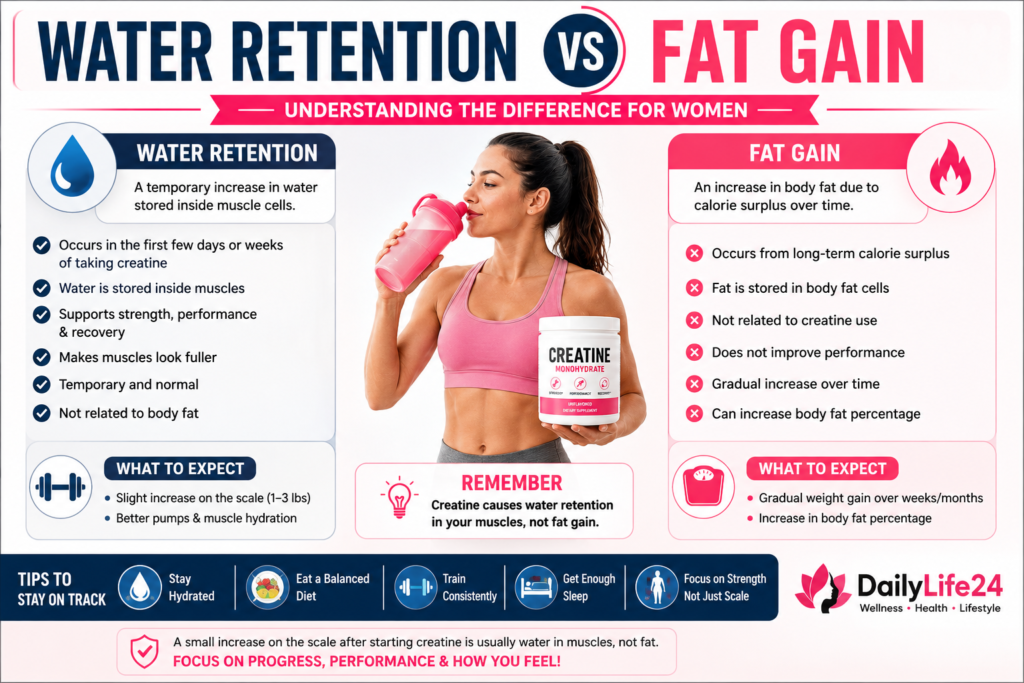
Water retention associated with creatine primarily occurs inside muscle cells, supporting hydration and muscle function. Fat gain, on the other hand, results from excess calorie intake over time.
Water Retention
Characteristics include:
- Temporary increase in body weight.
- Fuller-looking muscles.
- Better muscle hydration.
- Usually occurs during the first week of supplementation, especially after loading.
Fat Gain
Characteristics include:
- Gradual increase in body fat percentage.
- Requires a long-term calorie surplus.
- Not caused directly by creatine.
- Influenced by nutrition and overall lifestyle.
Understanding this distinction helps women interpret changes on the scale more accurately and prevents unnecessary concern.
Water Retention vs. Fat Gain Comparison
| Water Retention | Fat Gain |
| Water stored inside muscles | Fat stored in body tissue |
| May occur shortly after starting creatine | Develops gradually over time |
| Supports muscle function | Results from excess calorie intake |
| Often temporary | Longer-term change in body composition |
| Not considered body fat | Increases body fat percentage |
Does Creatine Affect Women’s Hormones?
Another common question about creatine side effects for women is whether creatine interferes with hormone balance.
Current research indicates that creatine does not significantly disrupt normal female hormone levels when used at recommended dosages.
Unlike hormone-based medications or anabolic steroids, creatine works by increasing phosphocreatine availability inside muscle cells. Its primary role is energy production rather than altering endocrine function.
This is one reason sports nutrition experts continue to recommend creatine as one of the safest evidence-based supplements for healthy adults.
Hormonal Changes Are Often Misattributed
Women naturally experience hormonal fluctuations throughout:
- The menstrual cycle.
- Pregnancy.
- Postpartum recovery.
- Perimenopause.
- Menopause.
Because these life stages can influence mood, body weight, energy levels, and physical performance, creatine is sometimes blamed for changes that are actually related to normal hormonal variation.
Current evidence doesn’t support the idea that creatine side effects for women include significant hormonal disruption.
Does Creatine Affect the Menstrual Cycle?
Some women also wonder whether creatine changes menstrual cycles or reproductive health.
At present, there is no strong scientific evidence showing that creatine disrupts normal menstrual cycles in healthy women.
Most available studies have focused on exercise performance, muscle function, recovery, and healthy aging rather than menstrual health. As research continues to grow, current findings remain reassuring regarding the safety of creatine supplementation for healthy adult women.
If you notice unexpected menstrual changes after starting any supplement, it’s important to discuss them with a qualified healthcare professional rather than assuming creatine is the cause.
Many factors—including stress, nutrition, illness, sleep quality, and hormonal conditions—can affect menstrual regularity.
Other Common Myths About Creatine Side Effects for Women
Several myths continue circulating despite a lack of scientific evidence.
These include claims that creatine:
- Causes infertility.
- Permanently damages organs.
- Weakens bones.
- Causes severe dehydration.
- Stops the body’s natural creatine production.
- Leads to dependence.
Current scientific literature does not support these claims in healthy women using recommended amounts of creatine monohydrate.
Separating evidence from misinformation allows women to make confident decisions based on research rather than internet speculation.
Who Should Avoid Creatine?
Although research shows that creatine side effects for women are uncommon in healthy adults, creatine isn’t appropriate for everyone. Certain medical conditions and life stages require additional caution before starting supplementation.
For most healthy women, creatine monohydrate has an excellent safety profile when taken as directed. However, if you have an existing health condition, it’s always wise to seek professional medical advice before adding any supplement to your routine.
Women who should speak with a healthcare provider before using creatine include those who:
- Have chronic kidney disease.
- Have significantly reduced kidney function.
- Have serious liver disease.
- Are taking medications that may affect kidney function.
- Have been advised to follow a medically restricted diet.
- Have an unexplained medical condition affecting fluid balance.
These precautions don’t mean creatine is unsafe. Instead, they ensure supplementation is appropriate for your individual health needs.
Is Creatine Safe During Pregnancy or Breastfeeding?
Pregnancy and breastfeeding are unique life stages where nutritional needs change significantly.
At present, research on creatine supplementation during pregnancy and breastfeeding is still developing. While some emerging studies are exploring potential benefits, there isn’t enough high-quality evidence to recommend routine supplementation for all pregnant or breastfeeding women.
Because of the limited research, most healthcare professionals recommend discussing creatine with your doctor before using it during pregnancy or while nursing.
Taking a cautious approach helps ensure the safety of both mother and baby.
Can Women with Medical Conditions Take Creatine?
Many women manage chronic health conditions while maintaining active lifestyles. Whether creatine is appropriate depends on the specific condition and your healthcare provider’s recommendations.
For example, women living with:
- Kidney disorders.
- Liver disease.
- Diabetes.
- High blood pressure.
- Autoimmune conditions.
should receive individualized medical advice before beginning supplementation.
Current research primarily supports the safety of creatine in healthy adults, so recommendations may differ for women with underlying medical concerns.
Is Creatine Safe for Long-Term Use?
Long-term safety is one of the most important questions surrounding creatine side effects for women.
Fortunately, creatine is among the most extensively studied dietary supplements available. Decades of scientific research have evaluated its use in athletes, older adults, recreational exercisers, and healthy individuals.
The overall evidence consistently shows that long-term creatine supplementation at recommended dosages is safe for healthy adults.
Researchers have monitored participants using creatine for months and even years without finding evidence of serious health problems directly caused by the supplement.
What Long-Term Research Shows
Studies have reported that long-term creatine use:
- Maintains a strong safety profile.
- Doesn’t damage healthy kidneys.
- Doesn’t harm a healthy liver.
- Doesn’t negatively affect hydration status.
- Continues to support strength and exercise performance.
These findings have helped establish creatine as one of the most trusted supplements in sports nutrition.
Do You Need to Cycle Creatine?
Another common myth is that creatine should be cycled.
Current evidence doesn’t support the need to repeatedly stop and restart creatine supplementation in healthy adults.
Many women safely use creatine continuously as part of their long-term nutrition and fitness routine without cycling.
When Should You Stop Taking Creatine?
Although serious creatine side effects for women are uncommon, there are situations where stopping supplementation and seeking medical advice is appropriate.
You should discontinue creatine and consult a healthcare professional if you experience:
- Persistent digestive discomfort that doesn’t improve.
- Allergic reactions such as rash or swelling.
- Unexplained pain or unusual symptoms after beginning supplementation.
- Medical advice instructing you to stop.
- A newly diagnosed health condition affecting supplement use.
Stopping creatine for these reasons doesn’t necessarily mean creatine caused the problem. A medical evaluation helps identify the true cause.
How to Reduce the Risk of Creatine Side Effects for Women
Most potential creatine side effects for women can be minimized by following simple, evidence-based practices.
Choose High-Quality Creatine Monohydrate
Purchase creatine from reputable manufacturers that provide third-party quality testing whenever possible.
Choosing a trusted product reduces the risk of contamination from unnecessary ingredients.
Follow Recommended Dosages
Taking more creatine than recommended doesn’t provide additional benefits for most healthy women.
Following evidence-based intake guidelines helps maximize benefits while minimizing unnecessary digestive discomfort.
For detailed intake recommendations, see our Creatine Dosage for Women guide.
Stay Properly Hydrated
Good hydration supports overall health and exercise performance.
Drinking adequate fluids throughout the day becomes especially important if you train intensely or exercise in hot environments.
Maintain a Balanced Lifestyle
Creatine works best when combined with:
- Regular exercise.
- Adequate sleep.
- Balanced nutrition.
- Sufficient daily protein intake.
- Consistent training habits.
Supplements should complement healthy lifestyle choices rather than replace them.
Research Summary on Creatine Side Effects for Women
After reviewing decades of scientific evidence, one conclusion remains consistent:
For healthy adults, creatine side effects for women are generally mild, uncommon, and manageable when the supplement is used responsibly.
The strongest scientific evidence does not support many of the myths that continue circulating online, including claims that creatine routinely causes hair loss, kidney damage, liver disease, acne, infertility, or excessive fat gain.
Instead, the most commonly reported effects are temporary water retention or mild digestive discomfort in some individuals—both of which can often be reduced through proper supplementation practices.
Understanding the difference between scientific evidence and misinformation allows women to make informed decisions based on research rather than fear.
Creatine Side Effects for Women: What Every Beginner Should Know
If you’re taking creatine for the first time, it’s natural to have questions about creatine side effects for women. Fortunately, decades of scientific research show that creatine is one of the safest sports nutrition supplements available for healthy adults. Most reported side effects are mild, temporary, and can often be minimized by following recommended supplementation practices and maintaining good hydration.
Frequently Asked Questions
What are the most common creatine side effects for women?
The most commonly reported creatine side effects for women are mild and temporary. Some women experience slight water retention inside the muscles, minor digestive discomfort, or a small increase in body weight during the first few weeks. Most healthy women tolerate creatine well when using the recommended amount.
Do creatine side effects for women include hair loss?
Current scientific research does not show that creatine side effects for women include hair loss. Although one early study involving male athletes raised questions about hormone changes, later research has not confirmed that creatine directly causes hair thinning or hair loss in women.
Can creatine damage a healthy woman’s kidneys?
No. Research consistently shows that recommended creatine supplementation does not damage healthy kidneys. Women with existing kidney disease or reduced kidney function should consult their healthcare provider before taking creatine.
Does creatine cause bloating in women?
Some women may notice temporary bloating, particularly during a loading phase. However, this effect is usually mild and often decreases as the body adapts. Many women who skip the loading phase report little or no bloating.
Does creatine increase body fat?
No. Creatine side effects for women do not include direct fat gain. Any early increase in body weight is usually caused by additional water stored inside muscle cells rather than an increase in body fat.
Can women take creatine every day?
Yes. Healthy women can generally take creatine every day as part of a consistent fitness and nutrition routine. Long-term research supports its safety when used according to recommended guidelines.
Is creatine safe for women over 40?
Current evidence suggests creatine is safe for many healthy women over 40. It may even support muscle strength and physical performance when combined with resistance training. Women with medical conditions should consult their healthcare provider before beginning supplementation.
Should I stop taking creatine if I experience side effects?
Minor digestive discomfort or temporary water retention often improve with proper use. However, if you experience unusual symptoms, allergic reactions, or have concerns about your health, stop taking creatine and seek medical advice promptly.
Is creatine safe for beginners?
Yes. Beginners can safely use creatine if they follow recommended intake guidelines and choose a high-quality creatine monohydrate supplement. Consistency and proper hydration are more important than taking large amounts.
What is the best way to reduce creatine side effects for women?
The best way to reduce creatine side effects for women is to use a quality creatine monohydrate supplement, follow recommended intake guidelines, stay well hydrated, and maintain a balanced diet alongside regular exercise.
Final Thoughts
The topic of creatine side effects for women is often surrounded by myths, misinformation, and unnecessary concern. Fortunately, decades of scientific research provide reassuring evidence that creatine is one of the most thoroughly studied dietary supplements available.
For healthy women, the available research indicates that serious side effects are rare when creatine is used responsibly. Most concerns—including hair loss, kidney damage, liver disease, acne, and fat gain—are not supported by strong scientific evidence in healthy individuals.
Like any dietary supplement, creatine should be used thoughtfully and according to evidence-based recommendations. Choosing a reputable product, following appropriate intake guidelines, staying hydrated, and consulting a healthcare professional when necessary can help you use creatine safely and confidently.
If you’re considering adding creatine to your routine, understanding the facts behind creatine side effects for women allows you to make informed decisions based on science instead of common misconceptions.
Continue Your Creatine Journey with DailyLife24
Looking to learn more about creatine and women’s health? Explore our complete evidence-based creatine series to gain a deeper understanding of supplementation, dosage, safety, workout timing, and healthy aging.
- Creatine for Women – Your complete beginner’s guide covering benefits, safety, and how creatine works.
- Best Creatine Monohydrate for Women – Compare the top creatine supplements to find the best option based on quality, purity, value, and effectiveness.
- Creatine Dosage for Women – Learn the recommended daily dosage, loading phase, maintenance intake, hydration tips, and common dosage mistakes.
- Creatine Before or After Workout for Women – Find out whether taking creatine before or after exercise makes a difference, including guidance for rest days, morning vs. evening workouts, protein shakes, and coffee.
- Creatine for Women Over 40 – Learn how creatine may support muscle preservation, menopause, strength, recovery, bone health, and healthy aging for women over 40.
At DailyLife24, we’re committed to publishing trustworthy, science-backed health content that helps women make informed decisions and achieve their fitness and wellness goals with confidence.
Editorial Note
Editorial Note: This article has been researched and compiled using publicly available information from official websites, verified organizations, peer-reviewed scientific studies, reputable health publications, interviews, public records, and other trusted sources. While we make every effort to ensure accuracy, scientific understanding and health recommendations may evolve over time. This article is intended for informational and educational purposes only and should not replace professional medical advice, diagnosis, or treatment. Always consult a qualified healthcare professional before starting any dietary supplement or making significant changes to your health routine.