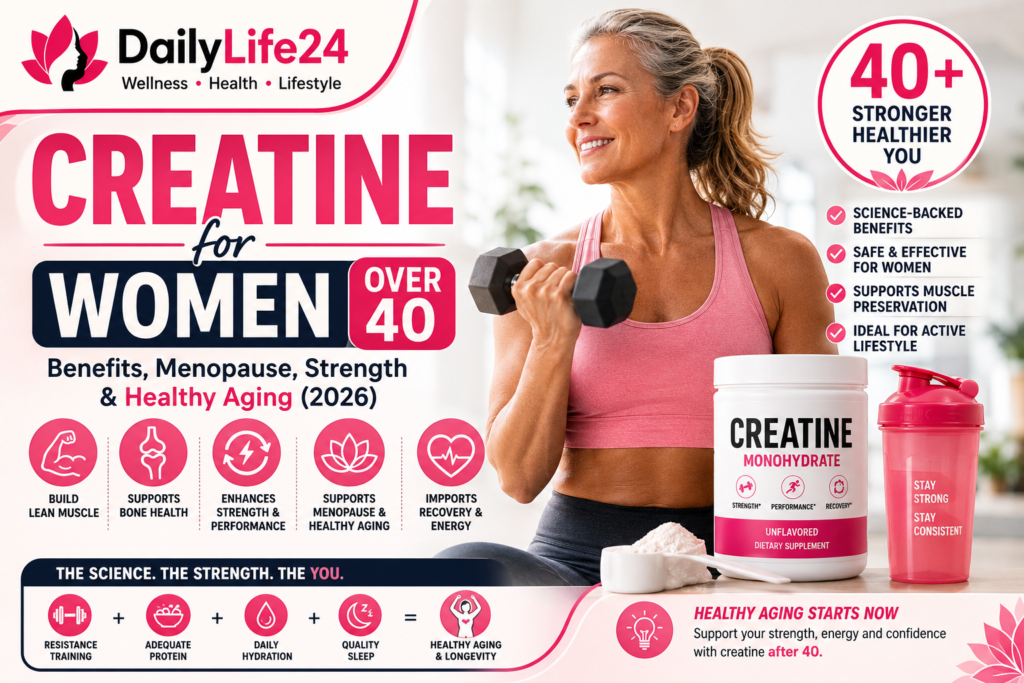
Turning 40 often brings noticeable changes to your body. You may find it harder to maintain muscle, your workouts don’t feel as productive as they once did, recovery takes longer, and changes related to perimenopause or menopause can affect your strength and energy. These natural changes lead many women to ask whether creatine for women over 40 can help support healthy aging.
The answer is encouraging. Research over the past two decades suggests that creatine for women over 40 may support muscle strength, exercise performance, recovery, and healthy aging when combined with resistance training and a balanced diet. Scientists are also exploring its potential role in supporting bone health, cognitive function, and overall physical performance during midlife and beyond.
Unlike many supplements marketed toward women, creatine is backed by extensive scientific research. Rather than acting as a stimulant or quick fix, it works by increasing phosphocreatine stores inside your muscles, helping produce energy during short bursts of activity and supporting long-term muscle function.
This guide explains everything you need to know about creatine for women over 40, including how aging affects muscle health, the relationship between creatine and menopause, its potential benefits for bone health and recovery, who may benefit the most, and what current research says about long-term use.
If you’re new to creatine supplementation, start with our complete Creatine for Women guide. You can also explore our articles on Creatine Dosage for Women, Creatine Side Effects for Women, and Creatine Before or After Workout for Women to build a complete understanding of safe and effective supplementation.
Quick Facts About Creatine for Women Over 40
| Topic | Summary |
| Main Benefit | Supports strength, muscle preservation, and exercise performance |
| Best Age to Start | Around perimenopause or whenever muscle preservation becomes a goal |
| Suitable During Menopause | Yes, for most healthy women after consulting a healthcare professional if needed |
| Muscle Health | Helps support lean muscle when combined with resistance training |
| Bone Health | May indirectly support bone health through improved muscle strength and exercise |
| Recovery | Can help improve recovery from resistance training |
| Long-Term Safety | Supported by extensive research in healthy adults |
| Best Results | Consistent supplementation, strength training, adequate protein, and healthy lifestyle |
Table of Contents
- Why Muscle Changes After 40
- Why Creatine for Women Over 40 Is Becoming More Popular
- Creatine and Menopause
- Muscle Preservation After 40
- Bone Health and Healthy Aging
- Recovery and Exercise Performance
- Protein and Resistance Training
- Who Should Consider Creatine?
- Scientific Research
- Frequently Asked Questions
Why Muscle Changes After 40
As women grow older, maintaining muscle becomes more challenging. Beginning in the fourth decade of life, gradual declines in muscle mass and strength become increasingly common. Hormonal changes, lower physical activity, reduced protein intake, and the natural aging process all contribute to these changes.
This gradual loss of muscle is known as sarcopenia, an age-related condition that affects millions of adults worldwide. While sarcopenia progresses slowly, it can eventually reduce strength, mobility, balance, and overall quality of life if left unaddressed.
Fortunately, lifestyle choices play a major role in slowing these changes. Regular resistance training, adequate dietary protein, and evidence-based supplements are among the most effective strategies for maintaining muscle health as you age.
Why Creatine for Women Over 40 Is Becoming More Popular
Interest in creatine for women over 40 has grown significantly over the past several years. While creatine was once associated mainly with athletes and bodybuilders, newer research highlights its potential benefits for healthy aging and muscle preservation in middle-aged and older adults.
Many women over 40 begin to notice:
- Slower recovery after exercise.
- Reduced muscle strength.
- Lower energy during resistance training.
- Difficulty maintaining lean muscle.
- Changes related to perimenopause and menopause.
Because creatine helps replenish phosphocreatine stores inside muscle cells, researchers have investigated whether it can support women experiencing these age-related changes.
Current evidence suggests that creatine for women over 40 may help improve training quality, preserve lean muscle mass, and support strength gains when combined with regular resistance exercise.
Rather than replacing healthy habits, creatine works alongside proper nutrition and consistent exercise to help women maintain an active lifestyle throughout midlife and beyond.
How Creatine Supports Healthy Aging
Healthy aging involves much more than simply living longer. It means maintaining strength, mobility, independence, and the ability to perform everyday activities with confidence.
One reason creatine for women over 40 has attracted scientific attention is its ability to support high-energy movements that become increasingly important with age. Everyday tasks such as climbing stairs, carrying groceries, lifting grandchildren, or getting up from a chair all depend on adequate muscle strength.
Creatine helps muscles regenerate energy more efficiently during these short, powerful movements. When combined with resistance training, it may contribute to better exercise performance, allowing women to continue building or maintaining muscle as they age.
Researchers also continue exploring potential benefits beyond muscle health, including cognitive performance and overall functional independence, making creatine one of the most promising supplements for healthy aging.
Why Resistance Training Matters Even More After 40
Although creatine for women over 40 offers promising benefits, it works best when paired with regular resistance training.
Strength training sends a signal to your muscles that they need to grow stronger and remain active. Creatine supports this process by helping replenish the energy needed for repeated muscle contractions during exercise.
Simple resistance exercises such as:
- Squats
- Lunges
- Dumbbell presses
- Resistance band workouts
- Bodyweight exercises
- Machine-based strength training
can all help preserve muscle mass and improve physical function.
When resistance training is combined with adequate protein intake and creatine for women over 40, many women experience greater improvements in strength and muscle function than with exercise alone.
This combination forms one of the most effective evidence-based strategies for maintaining an active, healthy lifestyle during midlife and the years that follow.
Creatine for Women Over 40 and Menopause
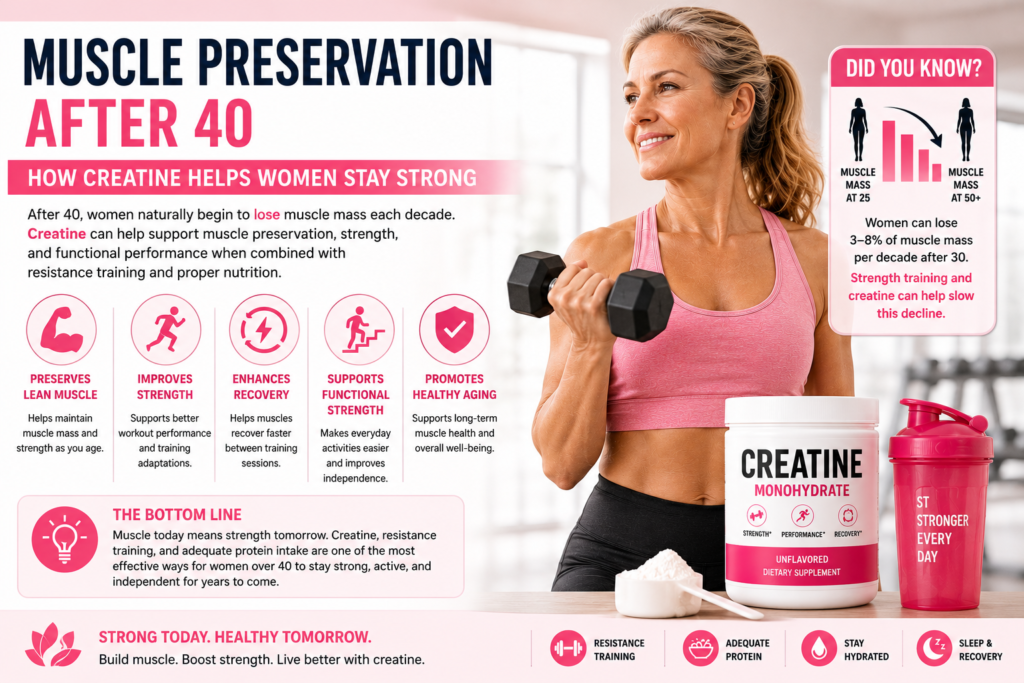
One of the biggest reasons interest in creatine for women over 40 has increased is the transition through perimenopause and menopause. During this stage of life, estrogen levels gradually decline, leading to changes that can affect muscle mass, strength, energy levels, and overall physical function.
Many women notice that maintaining lean muscle becomes more difficult than it was in their 20s or 30s. Recovery after exercise may take longer, and staying active often requires greater effort. These changes are normal, but they also highlight the importance of strength training, proper nutrition, and evidence-based supplementation.
Research suggests that creatine for women over 40 may help support muscle function during menopause when combined with resistance exercise. Although creatine doesn’t replace hormones or treat menopause symptoms, it may help women remain stronger and more physically active throughout this life stage.
How Menopause Affects Muscle Health
As estrogen declines, women commonly experience:
- Gradual loss of lean muscle mass.
- Reduced muscle strength.
- Slower exercise recovery.
- Lower physical performance.
- Increased fatigue during resistance training.
These changes occur gradually, making it important to adopt healthy habits before significant muscle loss develops.
Creatine for Women Over 40 and Muscle Preservation
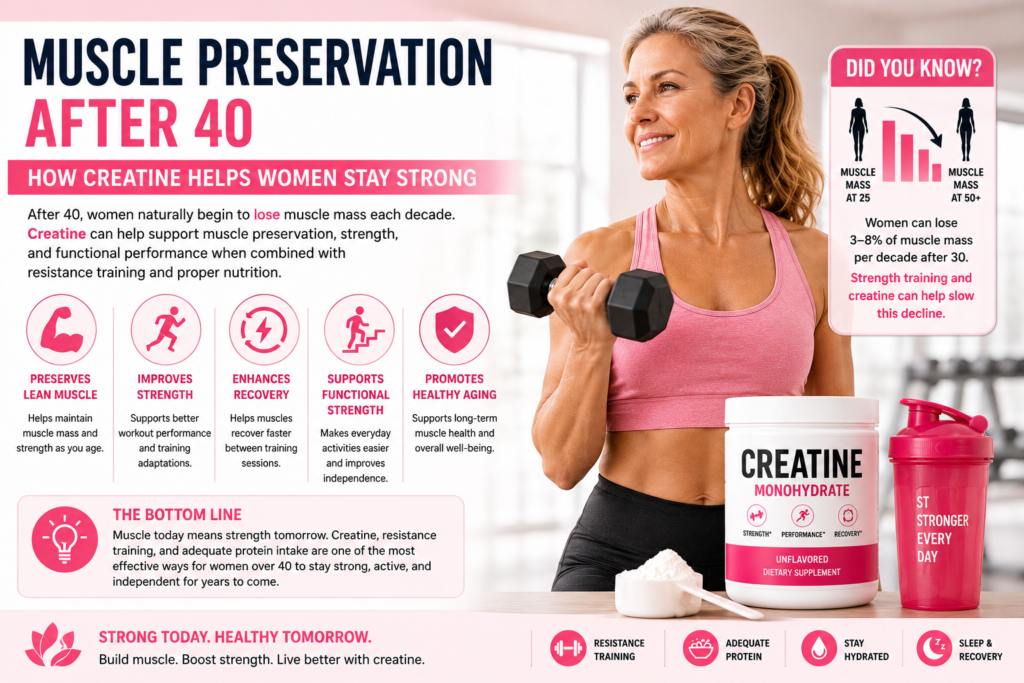
One of the primary reasons experts recommend creatine for women over 40 is its potential role in preserving muscle mass.
After the age of 40, adults naturally begin losing muscle each decade if they don’t participate in regular strength training. This process accelerates with aging and hormonal changes.
Creatine helps replenish phosphocreatine stores inside muscle cells, allowing muscles to produce energy more efficiently during high-intensity exercise. This enables many women to perform more repetitions, lift slightly heavier weights, or maintain training intensity over time.
Better workouts often translate into better long-term muscle preservation when combined with progressive resistance training.
Why Preserving Muscle Matters
Maintaining muscle isn’t only about appearance.
Healthy muscle supports:
- Better balance.
- Improved mobility.
- Greater independence.
- Easier everyday movement.
- Reduced risk of falls.
- Long-term healthy aging.
These benefits become increasingly valuable throughout midlife and beyond.
Creatine for Women Over 40 and Bone Health
Bone health becomes another major concern as women age.
Declining estrogen levels can contribute to reduced bone mineral density, increasing the risk of osteoporosis and fractures later in life.
Current research suggests that creatine for women over 40 doesn’t directly increase bone density on its own. However, it may indirectly support bone health by helping women perform resistance training more effectively.
Strength training places healthy stress on bones, encouraging them to maintain strength over time. Because creatine may improve training performance, it can become part of a broader strategy for supporting skeletal health.
For the best results, creatine should be combined with:
- Resistance exercise.
- Adequate calcium intake.
- Vitamin D.
- Protein-rich nutrition.
- Regular physical activity.
Creatine for Women Over 40 and Recovery
Recovery naturally changes with age.
Many women notice that soreness lasts longer after workouts compared with earlier years. Recovery from strength training sessions may also require more time.
This is another area where creatine for women over 40 has gained attention.
By supporting energy production inside muscle cells, creatine may help improve recovery between training sessions, allowing women to maintain a consistent exercise routine.
Faster recovery doesn’t necessarily mean eliminating soreness completely. Instead, it helps prepare the muscles for future workouts and supports long-term progress.
Signs of Better Recovery
Women following a consistent resistance-training program may notice:
- Less fatigue between workouts.
- Improved workout quality.
- Better training consistency.
- Greater strength over time.
- Improved physical confidence.
These improvements contribute to healthier aging when combined with regular exercise and balanced nutrition.
Creatine for Women Over 40 and Strength
Strength naturally declines with age if muscles aren’t challenged regularly.
This is why many health professionals encourage women over 40 to prioritize resistance training instead of relying only on cardio exercise.
Research indicates that creatine for women over 40 may help increase strength gains when paired with a structured resistance-training program.
Instead of acting as a shortcut, creatine supports the body’s ability to perform repeated high-intensity movements during exercise.
Over time, this can lead to:
- Better lifting performance.
- Improved functional strength.
- Greater confidence during daily activities.
- Enhanced physical independence.
For women committed to healthy aging, combining creatine with strength training remains one of the most effective evidence-based strategies for maintaining muscle function well into later life.
Creatine for Women Over 40 and Exercise Performance
Maintaining physical performance becomes increasingly important after the age of 40. Everyday activities such as climbing stairs, carrying groceries, lifting grandchildren, or completing household tasks all require strength, balance, and muscular endurance.
This is one reason creatine for women over 40 has received growing attention from researchers studying healthy aging. By helping replenish phosphocreatine stores within muscle cells, creatine supports the rapid production of energy needed during resistance training and other high-intensity activities.
While creatine isn’t a substitute for exercise, it may help women train more effectively and recover well enough to remain physically active over the long term.
Women who consistently combine creatine with structured strength training often experience gradual improvements in:
- Exercise capacity.
- Functional strength.
- Muscular endurance.
- Training consistency.
- Physical confidence.
These benefits can translate into improved quality of life as women continue to age.
Creatine for Women Over 40 and Protein Intake
Protein becomes increasingly important after the age of 40 because aging muscles respond differently to exercise and nutrition than they did in younger adulthood.
Although creatine for women over 40 supports muscle energy production, protein supplies the amino acids needed to repair and build muscle tissue after exercise.
When these two strategies are combined with regular resistance training, they work together to support long-term muscle health.
Why Protein Matters
Adequate protein intake helps:
- Maintain lean muscle mass.
- Support muscle recovery.
- Promote healthy aging.
- Improve exercise adaptation.
- Reduce age-related muscle loss.
Many nutrition experts recommend distributing protein evenly throughout the day rather than consuming most of it in one meal.
Creatine and Protein: A Powerful Combination
Research suggests that combining creatine for women over 40 with sufficient dietary protein may produce better training results than relying on either strategy alone.
Together they help support:
- Muscle preservation.
- Exercise recovery.
- Functional strength.
- Healthy body composition.
Rather than replacing nutritious foods, creatine should complement a balanced diet that includes adequate protein from high-quality sources.
Who Should Consider Creatine for Women Over 40?
Although every woman’s health journey is different, creatine for women over 40 may be worth considering if your goal is to maintain strength, remain active, and support healthy aging.
Women who may benefit include those who:
- Participate in resistance training.
- Want to preserve lean muscle.
- Are entering perimenopause.
- Are experiencing menopause.
- Want to improve workout performance.
- Wish to maintain physical independence.
- Want to support healthy aging through exercise.
Creatine isn’t reserved for athletes. Recreational exercisers and women simply looking to stay active may also benefit when supplementation is combined with a healthy lifestyle.
Who Should Talk to a Doctor First?
Although creatine for women over 40 has an excellent safety profile for healthy adults, some women should consult a healthcare professional before beginning supplementation.
This includes women who:
- Have kidney disease.
- Have serious liver disease.
- Take medications affecting kidney function.
- Have chronic medical conditions requiring dietary supervision.
- Are pregnant or breastfeeding.
Receiving personalized medical advice helps ensure creatine supplementation is appropriate for your individual health needs.
Scientific Research on Creatine for Women Over 40
Scientific interest in creatine for women over 40 has expanded considerably over the past decade.
Researchers have investigated how creatine may support healthy aging, particularly when paired with resistance training.
Current evidence suggests that creatine may help:
- Improve muscle strength.
- Support lean muscle preservation.
- Enhance exercise performance.
- Promote better recovery.
- Improve functional capacity during aging.
Although research into menopause-specific outcomes continues to grow, the overall evidence supports creatine as one of the most thoroughly studied nutritional supplements available.
Major sports nutrition organizations continue to recognize creatine monohydrate as safe and effective for healthy adults when used according to established recommendations.
Common Myths About Creatine for Women Over 40
Despite strong scientific evidence, misinformation still discourages many women from trying creatine.
Let’s separate myth from fact.
Myth: Creatine Is Only for Young Athletes
False.
One of the fastest-growing areas of research focuses on creatine for women over 40 and healthy aging rather than competitive sports.
Myth: Creatine Causes Bulky Muscles
False.
Creatine supports muscle function and strength. It doesn’t automatically cause excessive muscle growth or produce a “bulky” appearance.
Myth: Women Over 40 Don’t Need Creatine
False.
While creatine isn’t essential for everyone, many women over 40 may benefit from improved training quality, muscle preservation, and recovery when supplementation is combined with resistance exercise.
Myth: Creatine Replaces Exercise
False.
No supplement can replace consistent physical activity.
Creatine works best alongside:
- Resistance training.
- Adequate protein intake.
- Balanced nutrition.
- Quality sleep.
- Healthy lifestyle habits.
When combined, these strategies create a strong foundation for healthy aging and long-term physical well-being.
How to Get the Best Results From Creatine for Women Over 40
Getting the most from creatine for women over 40 isn’t about relying on a supplement alone. The greatest benefits come from combining creatine with healthy daily habits that support muscle health, recovery, and long-term physical function.
A balanced approach allows women to stay stronger, maintain mobility, and continue enjoying an active lifestyle well beyond their 40s.
Prioritize Resistance Training
Resistance training remains the foundation of healthy aging.
Exercises such as:
- Squats
- Lunges
- Dumbbell exercises
- Resistance bands
- Bodyweight movements
- Machine-based strength training
help stimulate muscle growth and preserve strength. When paired with creatine for women over 40, these exercises may produce greater improvements in muscle function than exercise alone.
Eat a Protein-Rich Diet
Nutrition plays an equally important role.
Aim to include quality protein sources throughout the day, such as:
- Lean poultry
- Fish
- Eggs
- Greek yogurt
- Cottage cheese
- Beans and lentils
- Tofu
- Nuts and seeds
Adequate protein provides the building blocks needed for muscle repair, while creatine for women over 40 helps support the energy required during strength training.
Stay Physically Active
Not every workout needs to be intense.
In addition to resistance training, try to include:
- Walking
- Cycling
- Swimming
- Yoga
- Pilates
- Stretching
- Balance exercises
Regular movement supports cardiovascular health, joint mobility, and overall well-being while complementing the benefits of creatine.
Lifestyle Habits That Support Healthy Aging
Although creatine for women over 40 can be a valuable addition to your routine, everyday lifestyle choices have the greatest impact on long-term health.
Focus on building habits that you can maintain consistently.
Get Enough Sleep
Quality sleep supports:
- Muscle recovery.
- Hormonal balance.
- Cognitive function.
- Physical performance.
- Energy levels.
Most adults benefit from seven to nine hours of sleep each night.
Stay Hydrated
Proper hydration supports normal muscle function and overall health.
Drinking enough water becomes especially important if you’re physically active or exercising in warmer environments.
Manage Stress
Long-term stress can affect recovery, sleep quality, motivation, and overall health.
Helpful stress-management strategies include:
- Meditation.
- Deep breathing.
- Walking outdoors.
- Reading.
- Spending time with family.
- Mindfulness practices.
Combining these healthy habits with creatine for women over 40 creates a sustainable approach to aging well.
Is Creatine for Women Over 40 Right for You?
Every woman has unique health goals, activity levels, and medical history.
If your goals include:
- Maintaining muscle mass.
- Improving strength.
- Supporting exercise performance.
- Staying active during menopause.
- Preserving independence as you age.
then creatine for women over 40 may be worth considering as part of your overall wellness plan.
Rather than viewing creatine as a miracle supplement, think of it as one piece of a much larger healthy-aging strategy that also includes exercise, balanced nutrition, quality sleep, and regular physical activity.
Creatine for Women Over 40: Key Takeaways
After reviewing current scientific evidence, several conclusions become clear.
- Creatine for women over 40 is supported by extensive research in healthy adults.
- It may help preserve lean muscle when combined with resistance training.
- It supports strength, exercise performance, and recovery.
- It may indirectly contribute to healthier aging by helping women stay active.
- It works best alongside adequate protein intake and a balanced lifestyle.
- It is not a replacement for exercise or proper nutrition.
- Women with existing medical conditions should seek personalized medical advice before starting supplementation.
For many women entering their 40s, 50s, and beyond, maintaining muscle strength and mobility becomes one of the most valuable investments in long-term health. Combined with healthy daily habits, creatine for women over 40 can play an important role in supporting that goal.
Frequently Asked Questions
Is creatine good for women over 40?
Yes. Research suggests that creatine for women over 40 may help support muscle strength, exercise performance, recovery, and healthy aging when combined with resistance training and proper nutrition.
Can creatine help during menopause?
Creatine doesn’t treat menopause, but it may help support muscle function and physical performance during the hormonal changes associated with perimenopause and menopause.
Does creatine prevent age-related muscle loss?
Creatine alone cannot prevent muscle loss. However, when combined with regular strength training and adequate protein intake, it may help preserve lean muscle as women age.
Is creatine safe for healthy women over 40?
Current scientific evidence indicates that creatine is generally safe for healthy adults when used according to recommended guidelines. Women with existing medical conditions should consult a healthcare professional before beginning supplementation.
Is creatine for women over 40 safe?
Yes. Current scientific evidence suggests that creatine for women over 40 is generally safe for healthy adults when used responsibly. Women with kidney disease, serious medical conditions, or those taking certain medications should consult a healthcare professional before starting supplementation.
Can creatine help women during menopause?
Yes. Although creatine doesn’t treat menopause itself, research suggests that creatine for women over 40 may help support muscle strength, physical performance, and recovery during the hormonal changes associated with perimenopause and menopause.
Does creatine help prevent muscle loss after 40?
Age-related muscle loss cannot be completely prevented, but resistance training, adequate protein intake, and creatine for women over 40 may help preserve lean muscle mass and improve strength over time.
Can women over 40 take creatine every day?
Yes. Healthy women can generally take creatine daily as part of a consistent fitness and nutrition routine. Daily use helps maintain muscle creatine stores, which support long-term exercise performance.
Is creatine only for athletes?
No. Creatine for women over 40 isn’t limited to athletes. Recreational exercisers and women who simply want to maintain strength, mobility, and independence may also benefit when it is combined with regular physical activity.
Can creatine improve recovery after workouts?
Research indicates that creatine may support recovery by helping muscles replenish energy stores more efficiently after resistance training, making it easier to maintain a consistent exercise routine.
Does creatine increase bone density?
Current evidence doesn’t show that creatine directly increases bone density. However, by improving strength and supporting resistance training, creatine for women over 40 may indirectly contribute to better bone health over time.
Should women over 40 combine creatine with strength training?
Yes. The greatest benefits of creatine for women over 40 are consistently observed when supplementation is combined with resistance training rather than used alone.
Can vegetarians benefit from creatine?
Yes. Women who eat little or no meat may have lower natural creatine stores, making creatine for women over 40 especially beneficial when combined with a healthy diet and exercise program.
When should I talk to my doctor before taking creatine?
Speak with your healthcare provider before taking creatine if you have kidney disease, liver disease, are pregnant or breastfeeding, take medications affecting kidney function, or have any chronic medical condition requiring ongoing treatment.
Final Thoughts
Maintaining strength, mobility, and independence becomes increasingly important with age, and creatine for women over 40 has emerged as one of the most researched supplements for supporting those goals.
Current scientific evidence suggests that creatine can help improve strength, support lean muscle preservation, enhance exercise performance, and promote healthier aging when combined with resistance training, adequate protein intake, and an active lifestyle. While it isn’t a miracle solution, it can become a valuable part of a long-term wellness strategy for many women entering their 40s, 50s, and beyond.
Healthy aging isn’t about avoiding every physical change—it’s about staying strong enough to continue doing the activities you enjoy. By pairing regular exercise, balanced nutrition, proper recovery, and creatine for women over 40, you can build a foundation that supports your health for years to come.
Continue Your Creatine Journey with DailyLife24
Looking to learn more about creatine and women’s health? Explore our complete evidence-based creatine series to gain a deeper understanding of supplementation, dosage, safety, workout timing, and healthy aging.
- Creatine for Women – Your complete beginner’s guide covering benefits, safety, and how creatine works.
- Best Creatine Monohydrate for Women – Compare the top creatine supplements to find the best option based on quality, purity, value, and effectiveness.
- Creatine Dosage for Women – Learn the recommended daily dosage, loading phase, maintenance intake, hydration tips, and common dosage mistakes.
- Creatine Side Effects for Women – Discover the truth behind common myths about hair loss, kidney health, bloating, weight gain, and other safety concerns backed by scientific research.
- Creatine Before or After Workout for Women – Find out whether taking creatine before or after exercise makes a difference, including guidance for rest days, morning vs. evening workouts, protein shakes, and coffee.
At DailyLife24, we’re committed to publishing trustworthy, science-backed health content that helps women make informed decisions and achieve their fitness and wellness goals with confidence.
Editorial Note
Editorial Note: This article has been researched and compiled using publicly available information from official websites, verified organizations, peer-reviewed scientific studies, reputable health publications, interviews, public records, and other trusted online sources. While every effort has been made to ensure accuracy, health recommendations and scientific evidence may evolve over time. This content is provided for educational and informational purposes only and should not replace professional medical advice, diagnosis, or treatment. Always consult a qualified healthcare professional before starting any dietary supplement or making significant changes to your health routine.